Chemotherapy administration CPT codes describe how a drug was given, not which drug was given. The same visit can include a chemotherapy infusion, a second sequential chemotherapy drug, supportive infusions and pushes, and each is reported with a different code chosen by route, time and order of importance. Infusion coding errors are among the most common oncology denials and audit findings.
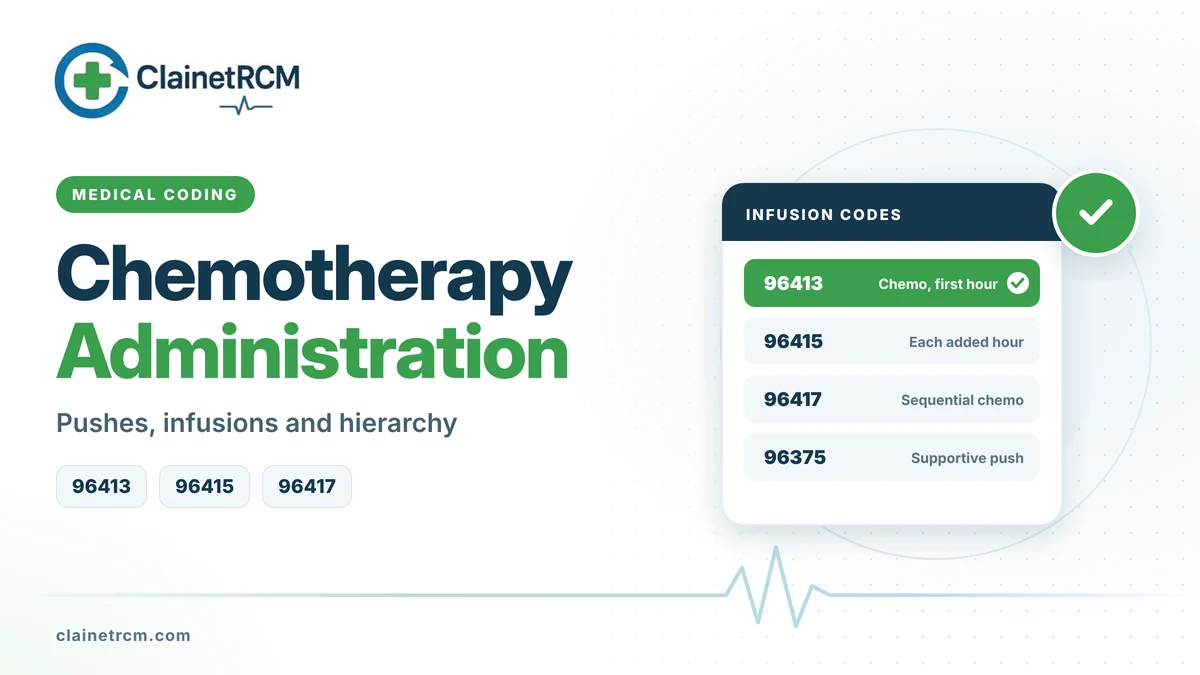
Quick answer: Report 96401 or 96402 for subcutaneous or intramuscular chemotherapy, 96409 for the first IV push and 96411 for each additional push of a different chemotherapy drug. An IV chemotherapy infusion of more than 15 minutes is 96413 for the first hour, plus 96415 for each additional hour when more than 30 minutes of the next hour is used, and 96417 for each additional sequential chemotherapy drug. Only one initial service is reported per encounter. In the physician office, the initial code is the primary reason for the visit; in a facility, it follows the hierarchy of chemotherapy first, then therapeutic or prophylactic drugs, then hydration, and infusions before pushes before injections.
What Counts as Chemotherapy Administration
The chemotherapy administration codes apply to antineoplastic drugs given to treat cancer, to antineoplastic drugs given for non-cancer conditions and to certain monoclonal antibodies and other biologic response modifiers. Supportive drugs such as antiemetics, steroids and antihistamines are reported with the therapeutic, prophylactic and diagnostic administration codes (96365 to 96379), even when given during a chemotherapy visit.
Chemotherapy Administration CPT Codes
| Code | Description |
|---|---|
| 96401 | Subcutaneous or intramuscular, non-hormonal antineoplastic |
| 96402 | Subcutaneous or intramuscular, hormonal antineoplastic |
| 96409 | IV push, single or initial drug |
| 96411 | IV push, each additional drug (add-on) |
| 96413 | IV infusion, up to 1 hour, single or initial drug |
| 96415 | IV infusion, each additional hour (add-on) |
| 96416 | Initiation of prolonged infusion (more than 8 hours) requiring a pump |
| 96417 | Each additional sequential infusion of a different drug, up to 1 hour (add-on) |
| 96420 to 96425 | Intra-arterial push and infusion |
| 96440, 96446, 96450 | Pleural, peritoneal and central nervous system administration |
| 96521, 96522 | Refilling and maintenance of portable or implantable pumps |
| 96523 | Irrigation of an implanted venous access device |
| 96549 | Unlisted chemotherapy procedure |
Time Rules
- Push vs infusion: a push is an injection where the provider stays to administer and observe, or any infusion of 15 minutes or less. Anything longer is an infusion.
- First hour: 96413 covers an infusion of 16 to 90 minutes.
- Additional hours: report 96415 when the infusion runs more than 30 minutes into the next hour. An infusion of 91 to 150 minutes is 96413 plus 96415 ×1; 151 to 210 minutes is 96413 plus 96415 ×2.
- Stop times matter: without a documented stop time, many payers will accept only a push code.
Choosing the Initial Service
Only one initial administration code is reported per encounter, unless the protocol requires two separate IV sites or the patient returns for a separate encounter the same day; in those cases, use modifier 59 or XU with documentation.
| Setting | How to choose the initial code |
|---|---|
| Physician office | The service that best describes the primary reason for the encounter, regardless of the order given |
| Hospital or other facility | The CPT hierarchy: chemotherapy before therapeutic or prophylactic drugs before hydration, and infusions before pushes before injections |
Every other service is reported with the subsequent, sequential or concurrent codes.
Sequential, Concurrent and Supportive Services
- Sequential chemotherapy: a different chemotherapy drug infused after the initial chemotherapy is 96417; a different chemotherapy drug by push is 96411.
- Supportive infusions: a non-chemotherapy drug infused after the initial service is 96367; a supportive IV push of a new drug is 96375.
- Concurrent infusion: a non-chemotherapy drug infused at the same time as another infusion through the same line is 96368, reported once per encounter.
- Hydration: report 96361 only when hydration is medically necessary, separately ordered and runs at least 31 minutes. Fluids used to administer a drug or keep the line open are not hydration.
- Port flush: 96523 is not separately reportable when other services using the port are billed the same day.
Drugs, Units and Modifiers
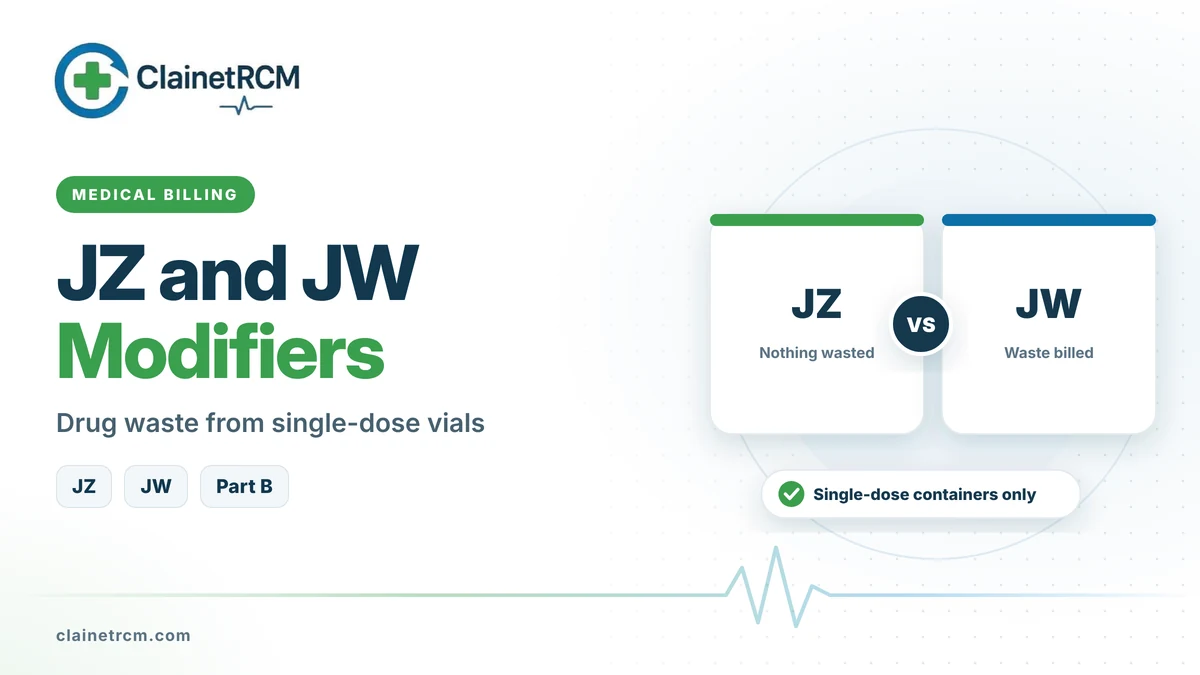
Bill each drug with its HCPCS code and units based on the dose given. For drugs from single-dose containers, Medicare requires modifier JW on a separate line for any discarded amount and modifier JZ when nothing was discarded. In the hospital outpatient setting, drugs billed with HCPCS codes typically use revenue code 0636.
Example: Office Visit
A patient receives ondansetron by IV push (5 minutes), dexamethasone by IV infusion (20 minutes), paclitaxel by IV infusion (3 hours) and carboplatin by IV infusion (45 minutes). The primary reason for the visit is chemotherapy.
- Paclitaxel: 96413 plus 96415 ×2
- Carboplatin: 96417
- Dexamethasone: 96367
- Ondansetron: 96375
- Drugs: each HCPCS drug code with units, plus JW or JZ as required
Frequently Asked Questions
Only when the protocol requires two separate IV sites or the patient returns for a separate encounter. Otherwise, report one initial code and use add-on codes for everything else.
When the chemotherapy infusion lasts more than 30 minutes beyond the first hour. A 75-minute infusion is 96413 only; a 95-minute infusion is 96413 plus 96415.
No. In the physician office, the initial code is the primary reason for the encounter. In a facility, the CPT hierarchy determines the initial service.
No. Antiemetics, steroids and other supportive drugs are reported with the therapeutic, prophylactic and diagnostic codes, such as 96367 and 96375.
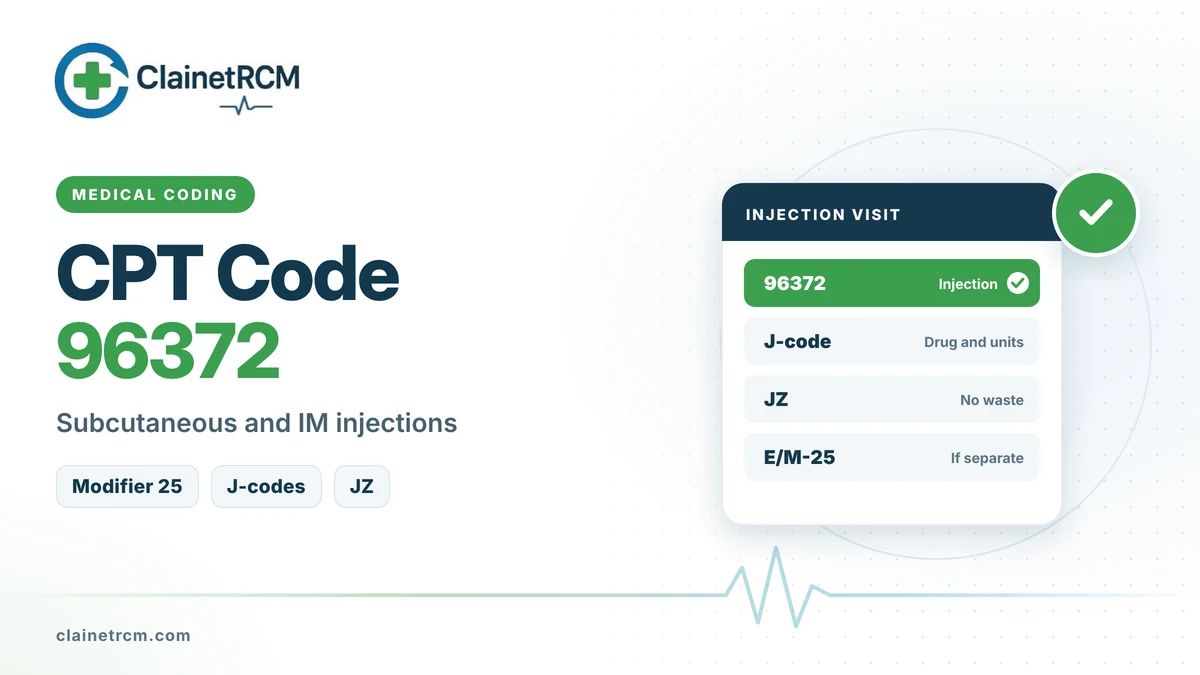
Only for a significant, separately identifiable service by a physician or other qualified professional, with modifier 25. A nurse visit with 99211 is not billed with drug administration codes.
Final Thoughts
Chemotherapy administration CPT codes depend on accurate times, the right initial service for your setting and complete drug lines. Learn how we support cancer centers on our hematology and oncology billing page, or review drug billing in our revenue code 636 guide.
Get Infusion Coding Right Every Visit
Our oncology coders match drug administration codes to start and stop times, apply the right hierarchy for your setting and pair every drug with the correct units.
Get Oncology Coding Help
Written by
ClainetRCM Billing Team
ClainetRCM is a Boston-based revenue cycle management company specializing in medical billing, coding, credentialing and denial management for healthcare providers across all 50 states. Our AAPC and AHIMA certified team works inside your existing EHR, files claims within 24 to 48 hours and reviews every AR bucket on a 14-day cycle.