Critical care CPT codes pay for the most intensive physician work in the hospital, and they are time-based, which makes documentation everything. Medicare also counts time differently from CPT for the add-on code, so a practice that follows CPT’s chart can overbill Medicare without realizing it.
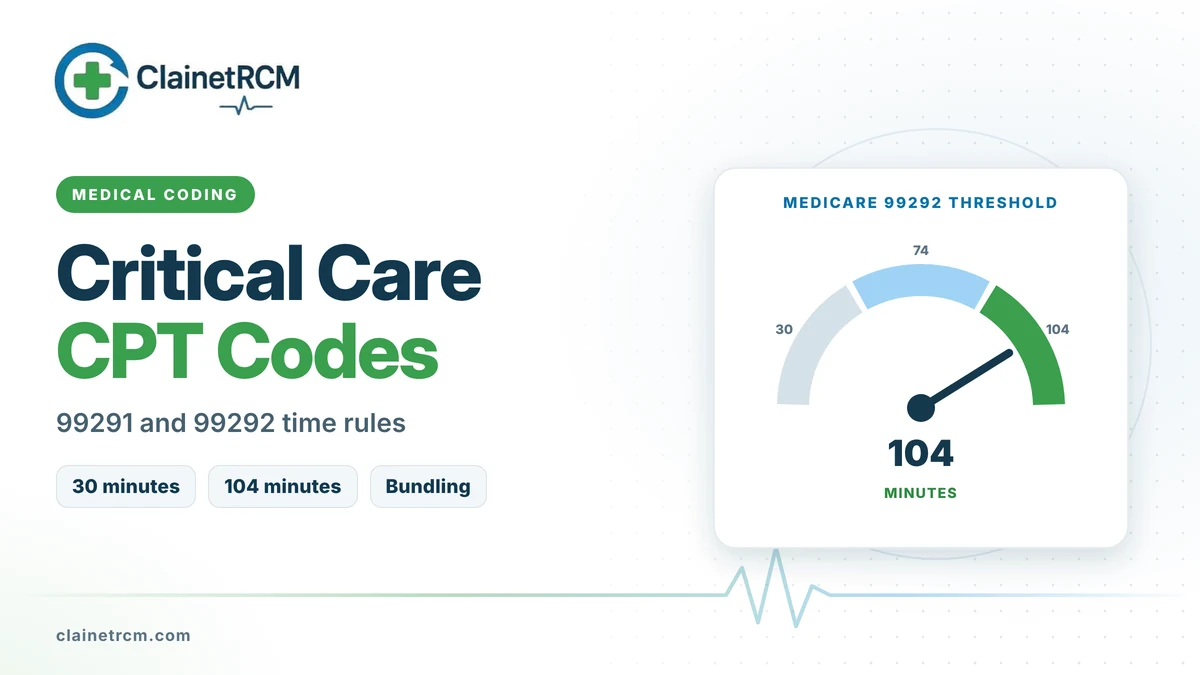
Quick answer: 99291 covers the first 30 to 74 minutes of critical care on a date of service, and 99292 covers each additional 30 minutes. Under CPT, the first 99292 is reported at 75 minutes; under Medicare, it is reported only after 104 minutes, a full 30 minutes beyond 74. Critical care requires a critical illness or injury that acutely impairs one or more vital organ systems with a high probability of imminent deterioration, plus high-complexity decision making. Many services, such as chest X-ray interpretation and ventilator management, are bundled services included in critical care. Use modifier FS for split/shared critical care, modifier FT for unrelated critical care during a global period, and modifier 25 when an E/M visit preceded critical care on the same day.
What Counts as Critical Care Under the Critical Care CPT Codes
Critical care is defined by the patient’s condition and the physician’s work, not by the location:
- The illness or injury acutely impairs one or more vital organ systems, such as central nervous system failure, circulatory failure, shock or respiratory failure.
- There is a high probability of imminent or life-threatening deterioration.
- The physician makes high-complexity decisions to assess, manipulate and support vital organ function.
A patient in the ICU is not automatically receiving critical care, and critical care can be provided in the emergency department, on a hospital floor or elsewhere.
Time Rules: CPT vs Medicare
| Total critical care time | CPT reporting | Medicare reporting |
|---|---|---|
| Under 30 minutes | Appropriate E/M code | Appropriate E/M code |
| 30 to 74 minutes | 99291 x 1 | 99291 x 1 |
| 75 to 103 minutes | 99291 + 99292 x 1 | 99291 x 1 |
| 104 to 133 minutes | 99291 + 99292 x 2 (from 105 minutes) | 99291 + 99292 x 1 |
| 134 to 163 minutes | 99291 + 99292 x 3 (from 135 minutes) | 99291 + 99292 x 2 |
Time does not need to be continuous. It includes time at the bedside and time on the unit reviewing data, discussing care with staff and documenting, and time with family when the patient cannot participate and the discussion is needed for treatment decisions. It excludes time spent on separately billed procedures.
Services Bundled Into Critical Care
When performed by the physician billing critical care, these services are included and not billed separately:
- Interpretation of cardiac output measurements and chest X-rays (such as 71045 and 71046)
- Pulse oximetry (94760 to 94762)
- Blood gases and data stored in computers, such as ECGs and blood pressures
- Gastric intubation (43752)
- Temporary transcutaneous pacing (92953)
- Ventilator management (94002 to 94004, 94660 and 94662)
- Vascular access procedures (36000, 36410, 36415, 36591 and 36600)
Procedures Billed Separately
Procedures not on the bundled list, such as CPR (92950), endotracheal intubation (31500), central line placement (36556) and arterial line placement (36620), are billed separately. Their time must be subtracted from critical care time, so document the procedure time or note that it was excluded.
Medicare Rules for Special Situations
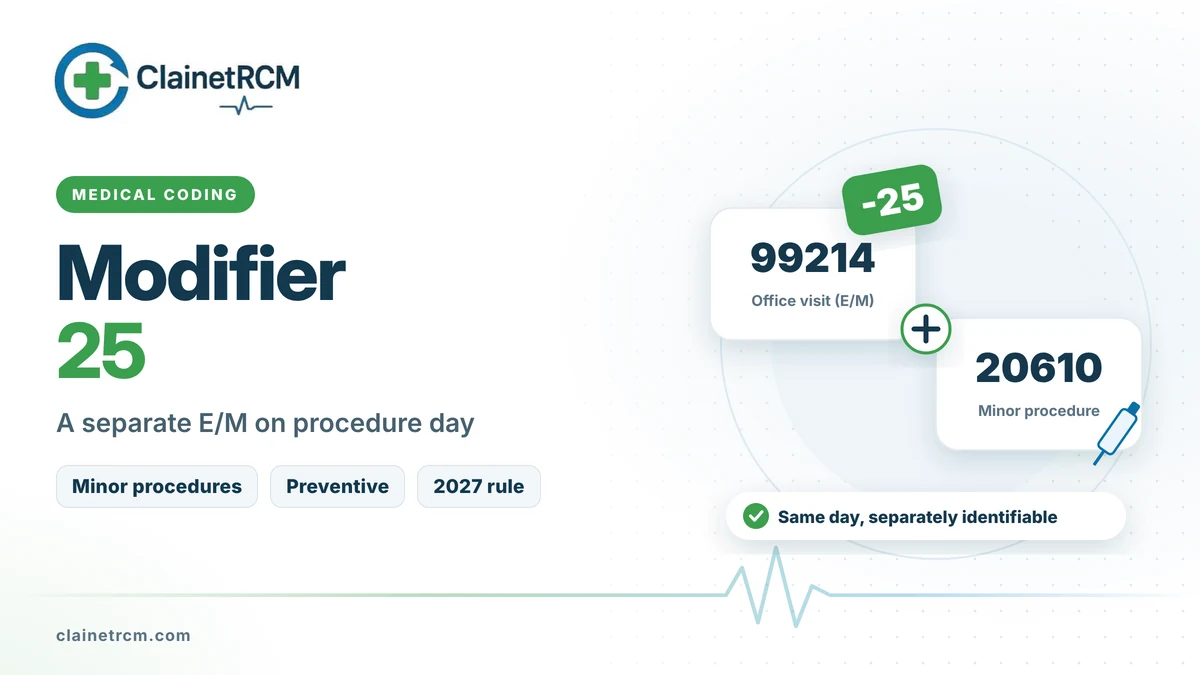
- Same-day E/M. If an E/M visit was provided earlier in the day before the patient became critically ill, both can be billed. Append modifier 25 to the critical care code and document the change in condition.
- Split/shared critical care. A physician and an NPP in the same group can combine time; the practitioner who provides more than half of the total time bills, with modifier FS.
- Same specialty, same group. Only one 99291 is paid per patient per day for practitioners of the same specialty in the same group. A colleague who provides additional critical care later that day bills 99292 when the combined time qualifies.
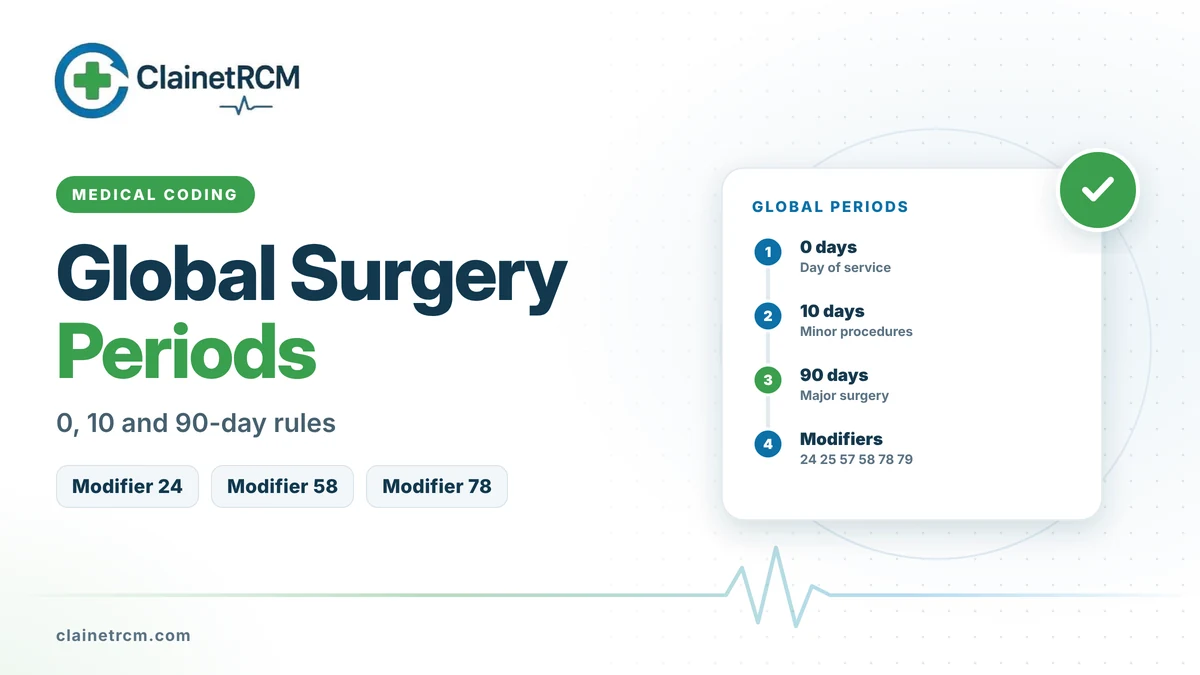
- Global surgery. Critical care unrelated to the surgery during the global period is billable with modifier FT and documentation showing it was unrelated.
- Telehealth consultations. G0508 and G0509 describe initial and subsequent critical care consultations furnished by telehealth.
Pediatric and Neonatal Critical Care
Patients 5 years old and younger receiving inpatient critical care are reported with per-day codes, such as 99468 and 99469 for neonates and 99471 to 99476 for infants and young children. These daily codes include many procedures that are separately billable with 99291 in adults.
Documentation Checklist
- The critical illness or injury and the organ systems involved
- Why the patient was at high risk of imminent deterioration
- Interventions and decisions made
- Total critical care time, excluding separately billed procedures
- A statement that the time excluded separately billable procedures
- For split/shared care, each practitioner’s time
Diagnosis Coding
Common diagnoses supporting critical care include R65.21 (severe sepsis with septic shock), J96.01 (acute respiratory failure with hypoxia), R57.0 (cardiogenic shock), I46.9 (cardiac arrest) and acute myocardial infarction codes. The diagnosis should reflect the condition that made the patient critically ill.
Frequently Asked Questions
At least 30 minutes of critical care on the date of service. Less than 30 minutes is reported with the appropriate E/M code.
After 104 total minutes of critical care, which is a full 30 minutes beyond the 74 minutes covered by 99291.
Yes. Critical care depends on the patient’s condition and the physician’s work, not the location.
No. Chest X-ray interpretation by the critical care physician is bundled.
Yes for Medicare, when the E/M occurred before the patient’s condition became critical. Append modifier 25 to the critical care code.
Final Thoughts
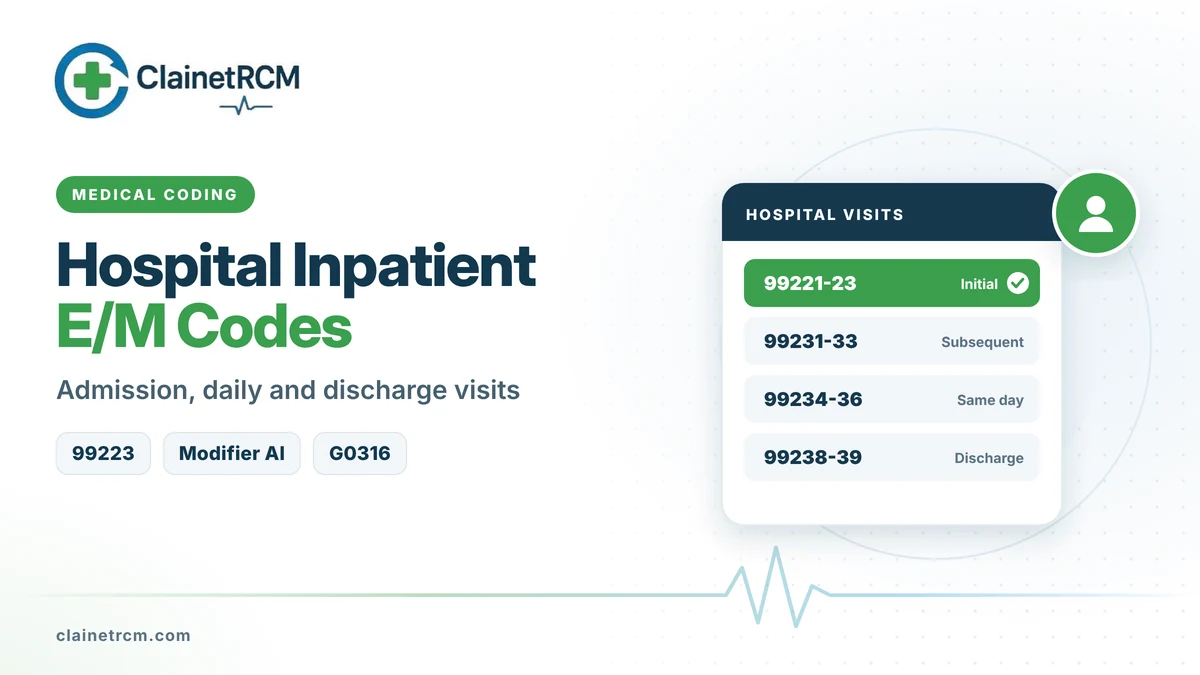
Critical care CPT codes reward precise time documentation and an understanding of what is bundled. Apply Medicare’s 104-minute rule for 99292, subtract procedure time and document why the patient was critically ill. Our critical care billing team reviews ICU and emergency documentation daily. For non-critical hospital visits, see our guide to hospital inpatient E/M codes.
Get Critical Care Time Paid Correctly
We review critical care documentation, apply CPT and Medicare time rules and separate billable procedures so every minute counts.
Get a Critical Care Review
Written by
ClainetRCM Billing Team
ClainetRCM is a Boston-based revenue cycle management company specializing in medical billing, coding, credentialing and denial management for healthcare providers across all 50 states. Our AAPC and AHIMA certified team works inside your existing EHR, files claims within 24 to 48 hours and reviews every AR bucket on a 14-day cycle.