G2211, the visit complexity add-on, is one of the easiest Medicare payments to miss. It is a small add-on, but it applies to a large share of primary care and specialty follow-up visits, and many practices still do not bill it consistently. It is also about to change: starting in 2027, Medicare replaces the code with a modifier.
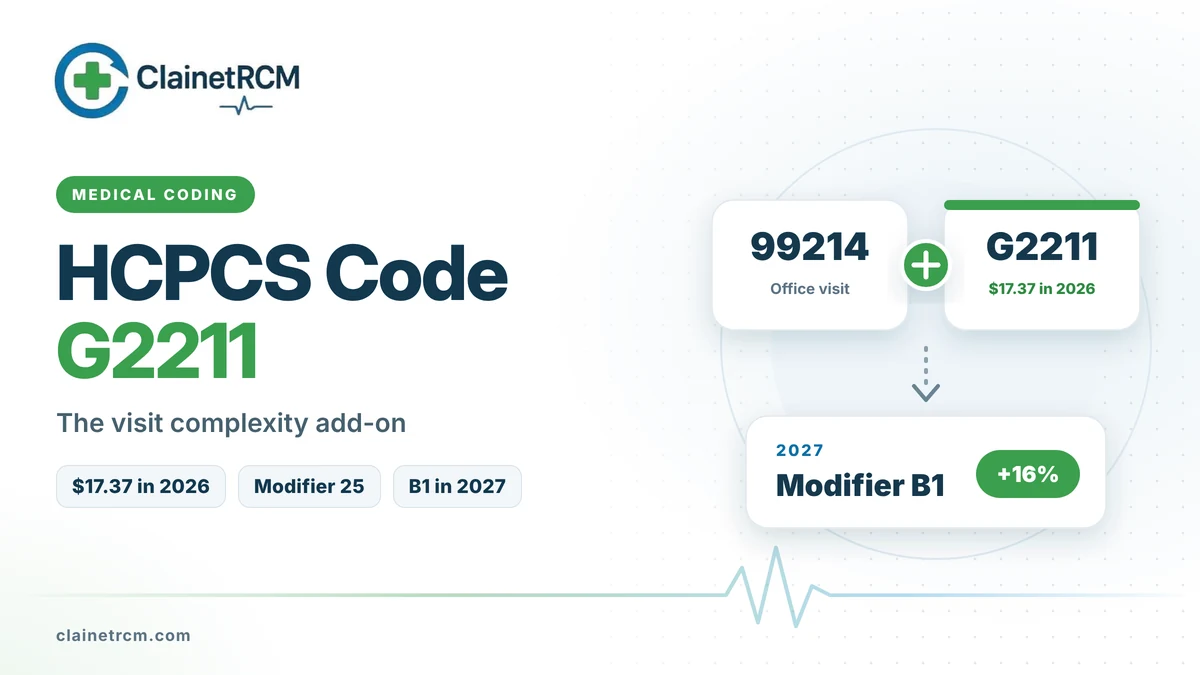
Quick answer: G2211 is a Medicare add-on code for office and outpatient E/M visits (99202-99205 and 99211-99215) when the practitioner is the continuing focal point for the patient’s care, or provides ongoing care for a single serious or complex condition. It pays $17.37 nationally in 2026, and starting in 2026 it can also be added to home or residence E/M visits. It generally cannot be billed when the E/M carries modifier 25, except when the other service that day is an annual wellness visit, a vaccine administration or a Medicare Part B preventive service. In 2027, G2211 becomes modifier B1, which adds 16% to the E/M payment.
HCPCS Code G2211 at a Glance
| Item | Detail |
|---|---|
| Code type | HCPCS Level II add-on code |
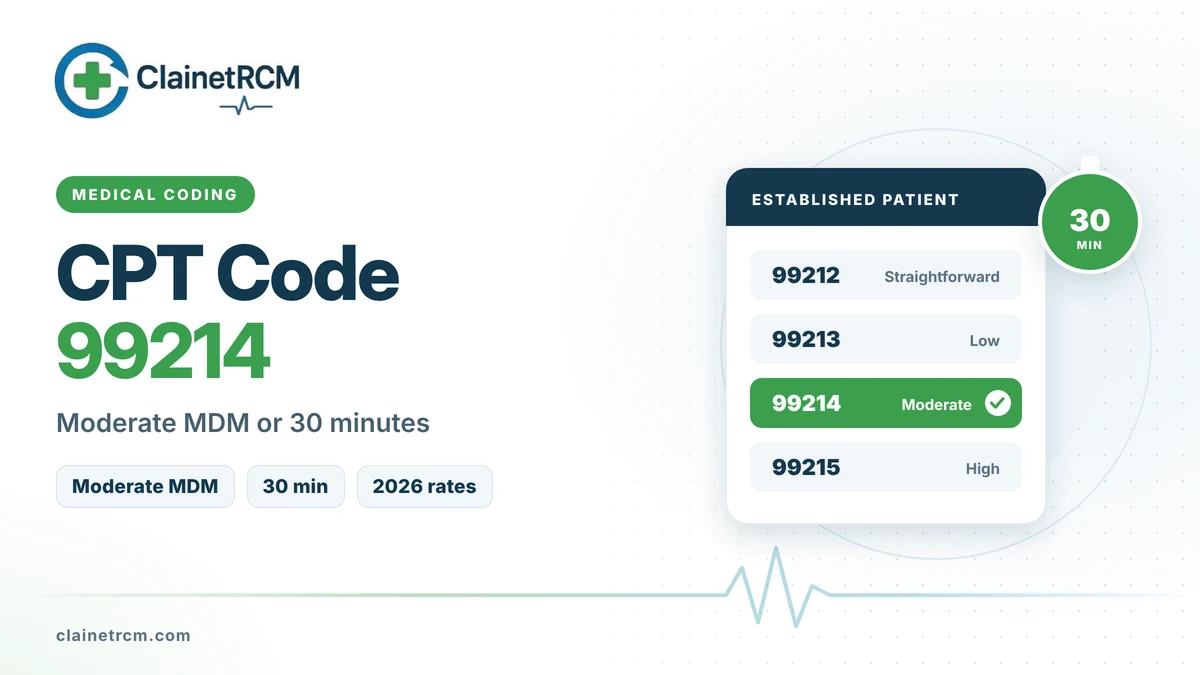
| Base codes | 99202-99205, 99211-99215; home or residence visits 99341, 99342, 99344, 99345 and 99347-99350 from 2026 |
| 2026 Medicare national rate | $17.37 (up from $15.53 in 2025) |
| Who can bill | Any specialty, when the longitudinal relationship criteria are met |
| Modifier 25 rule | Not payable with a modifier 25 E/M unless the other service is an AWV, vaccine administration or Part B preventive service |
| 2027 status | Replaced by modifier B1 (+16%) or B2 (+32% for certain ACO clinicians) |
What HCPCS Code G2211 Pays For
G2211 recognizes the extra work built into visits that are part of an ongoing relationship. The descriptor covers visit complexity inherent to E/M services that serve as the continuing focal point for all needed health care services, or that are part of ongoing care related to a patient’s single, serious condition or a complex condition.
In plain terms, G2211 pays for longitudinal care: the relationship, not that day’s level of complexity. CMS has described the work as the cognitive load of being responsible for a patient over time: keeping the whole picture in mind, coordinating with other clinicians and building the trust that ongoing care depends on. That is why a brief 99212 can qualify while a long, complex one-time visit cannot.
Who Can Bill G2211
G2211 is not limited to primary care. Two kinds of relationships qualify:
- Continuing focal point for all needed services. Typically primary care: family medicine, internal medicine, geriatrics and pediatrics, along with practitioners who serve as the patient’s medical home.
- Ongoing care for a single serious or complex condition. Specialists who manage a condition over time, such as an endocrinologist managing diabetes, an oncologist managing cancer treatment, a rheumatologist managing rheumatoid arthritis or an infectious disease physician managing HIV.
Visits that usually do not qualify: - One-time or episodic visits, such as an urgent care visit for a sprain - A specialist’s one-off consultation with no plan for ongoing management - Visits where the relationship is with a different practitioner
Nurse practitioners, physician assistants and other practitioners who bill office E/M visits can report G2211 when they meet the same criteria.
G2211 and Modifier 25
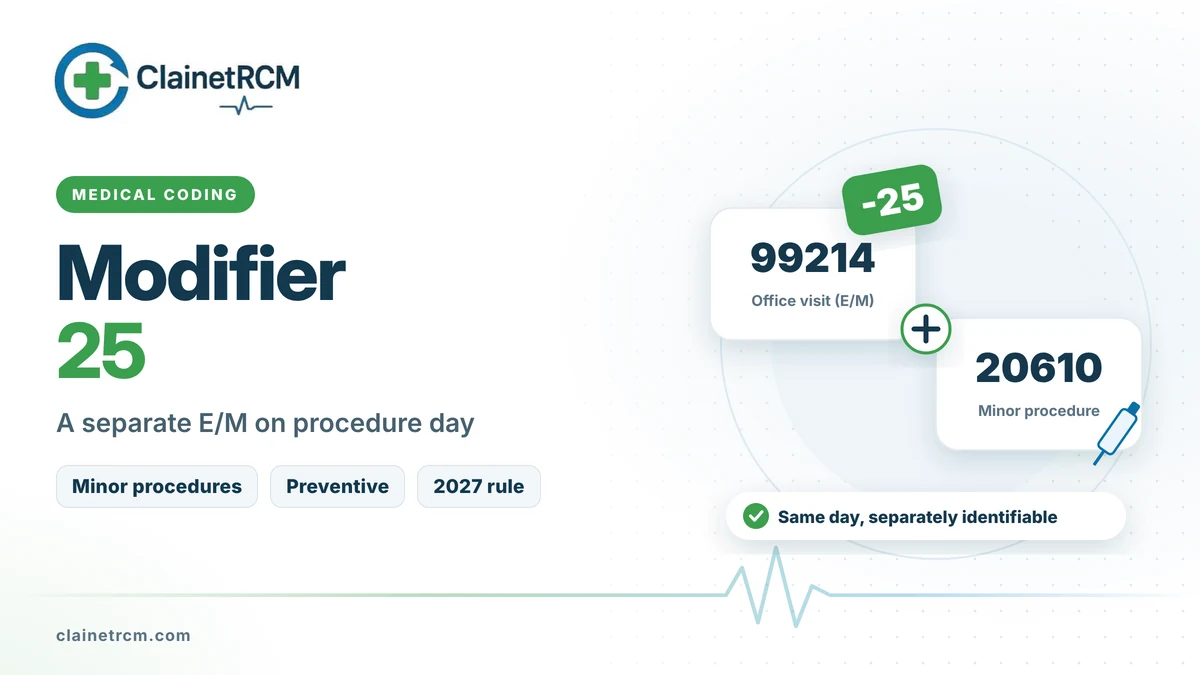
When G2211 started in 2024, Medicare would not pay it when the E/M was billed with modifier 25 on the same day as another service. Starting January 1, 2025, CMS allowed one exception. G2211 is payable with a modifier 25 E/M when the other same-day service is:
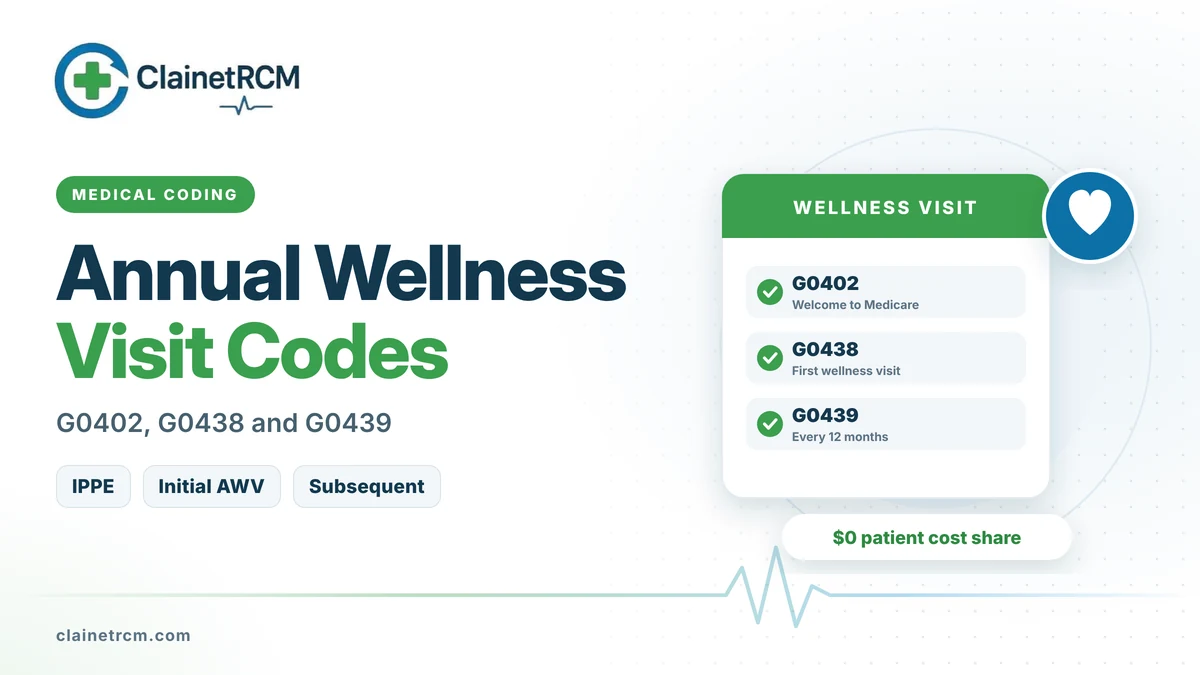
- An annual wellness visit (G0438 or G0439)
- A vaccine administration
- Any Medicare Part B preventive service furnished in the office or outpatient setting
So a patient who has an AWV and a separate problem-oriented visit with their primary care physician on the same day can generate G2211 on the E/M. A visit with a minor procedure, such as a joint injection, still cannot. See our modifier 25 guide and our annual wellness visit guide for the full pairing rules.
2026 Change: Home and Residence Visits
For 2026, CMS extended G2211 to the home or residence E/M family: 99341, 99342, 99344, 99345, 99347, 99348, 99349 and 99350. Practices that provide house calls or care in assisted living settings can now report the add-on under the same longitudinal criteria.
G2211 still does not apply to hospital inpatient, observation, emergency department or nursing facility E/M visits.
Documentation That Supports G2211
CMS has not created a separate documentation template for G2211, but the record should make the ongoing relationship clear. Helpful elements include:
- The conditions you manage over time, coded to full specificity
- An assessment and plan that reflect continuity, such as follow-up intervals and coordination with other clinicians
- For specialists, the serious or complex condition you are managing and your role in that care
Avoid adding G2211 automatically to every E/M. Medicare contractors can review the claims history, and a pattern of G2211 on one-time visits will not hold up.
Commercial Payers and Medicaid
G2211 is a Medicare code. Medicare Advantage plans generally follow Medicare rules, but coverage varies by plan. Many commercial plans and state Medicaid programs do not recognize it, and some reject the line. Check each payer’s policy before you add G2211 to non-Medicare claims, and set up your billing system to apply it only where it pays.
2027: G2211 Becomes Modifier B1
The CY 2027 Physician Fee Schedule final rule, released November 4, 2026, eliminates G2211 as a separate code and replaces it with two modifiers appended directly to qualifying office, outpatient, home and residence E/M codes:
- Modifier B1 generally applies in the same situations as G2211 and raises payment for the E/M visit by 16%, the same percentage at every visit level.
- Modifier B2 is available to clinicians in Medicare Shared Savings Program ACOs and participants in the LEAD model. It raises the E/M payment by 32%, is voluntary and can be used for any patient those clinicians see.
CMS generally kept the current restrictions on billing with modifier 25. The change takes effect with 2027 dates of service, so practices should plan to:
- Update charge capture so G2211 lines become B1 on the E/M line starting January 1, 2027
- Update fee schedules and contract models, since a percentage add-on pays more on higher-level visits
- Train coders and clinicians on when B1 or B2 applies
Frequently Asked Questions
G2211 is a Medicare add-on code for office, outpatient and, from 2026, home or residence E/M visits when the practitioner is the continuing focal point of the patient’s care or provides ongoing care for a single serious or complex condition.
The 2026 Medicare national rate is $17.37, before geographic adjustment.
Yes. Any specialty can bill G2211 when the visit is part of ongoing care for a serious or complex condition, such as an oncologist managing a patient’s cancer treatment.
Generally no. The exception, since 2025, is when the other same-day service is an annual wellness visit, a vaccine administration or a Medicare Part B preventive service.
Yes, when the visit begins a relationship in which you will be the continuing focal point of care or will manage a serious or complex condition over time.
It is replaced by modifier B1, which adds 16% to the E/M payment, or modifier B2, which adds 32% for clinicians in Shared Savings Program ACOs and the LEAD model.
Final Thoughts
G2211 rewards the ongoing relationships that sit at the center of good care, and it pays on a large share of follow-up visits. Bill it consistently when the relationship qualifies, keep it off episodic visits, and get your systems ready for modifier B1 before January. Our medical billing team builds these rules into charge capture, and our internal medicine billing specialists track every visit-level update.
Capture G2211 Now and Be Ready for B1
We flag eligible visits, apply the modifier 25 rules and update your charge capture for the 2027 switch to modifier B1, so no qualifying visit goes unpaid.
Talk to a Billing Expert
Written by
ClainetRCM Billing Team
ClainetRCM is a Boston-based revenue cycle management company specializing in medical billing, coding, credentialing and denial management for healthcare providers across all 50 states. Our AAPC and AHIMA certified team works inside your existing EHR, files claims within 24 to 48 hours and reviews every AR bucket on a 14-day cycle.