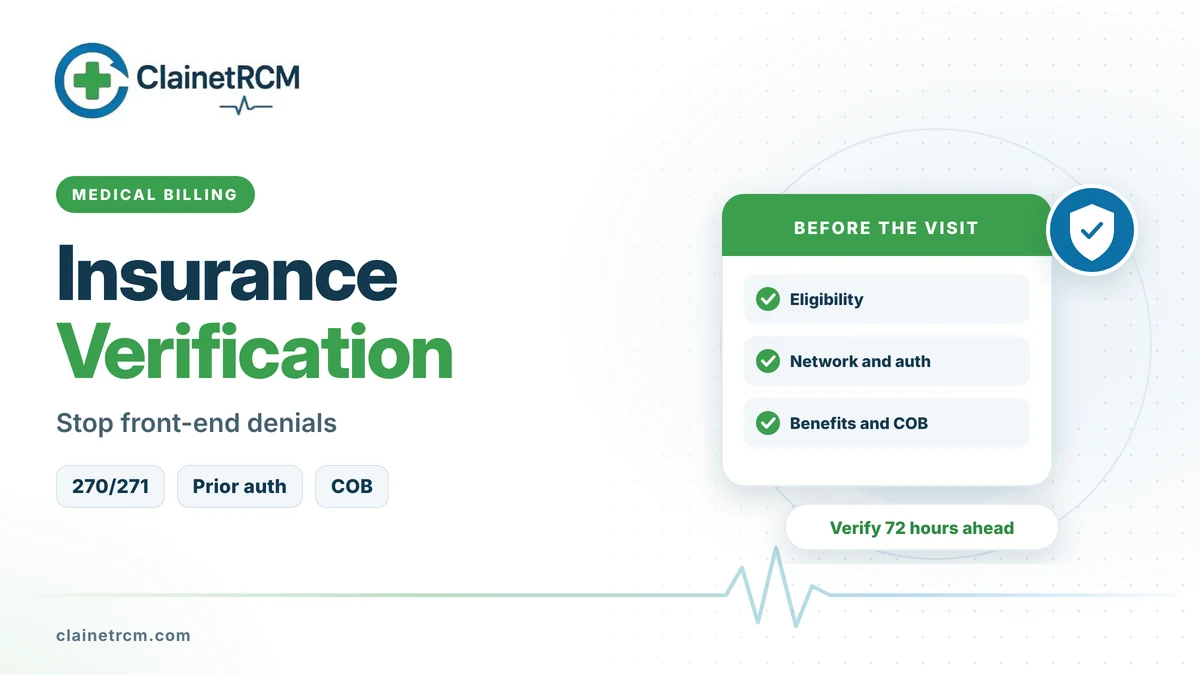
An insurance verification checklist is the cheapest denial prevention tool a practice can have. Eligibility, registration and authorization errors are among the most common causes of claim denials, and almost all of them can be caught before the patient is seen. A consistent checklist, worked a few days before each visit, turns those denials into simple phone calls.
Quick answer: Before every visit, confirm the patient’s demographics and subscriber details, active eligibility on the date of service, plan type and network status, referral and prior authorization requirements, benefits for the planned service (copay, coinsurance, deductible and visit limits), and any other coverage for coordination of benefits. Use 270/271 real-time eligibility transactions where possible, record a reference number, estimate the patient’s cost, and give uninsured or self-pay patients a Good Faith Estimate.
The Insurance Verification Checklist
1. Patient and Subscriber Information
- Patient’s legal name, date of birth and address exactly as the payer has them
- Subscriber’s name, date of birth and relationship to the patient
- Member ID and group number from a current card, front and back
- For Medicare, the Medicare Beneficiary Identifier (MBI), not an old Social Security-based number
2. Eligibility
- Coverage active on the date of service, not just today
- Effective and termination dates
- For Medicaid, eligibility for the specific month, since it can change monthly
- For Medicare patients, whether they have Original Medicare or a Medicare Advantage plan
3. Plan Type and Network Status
- HMO, PPO, EPO, POS, Medicare Advantage or Medicaid managed care
- Whether your practice and the rendering provider are in-network for this specific plan
- Assigned primary care provider, if the plan requires one
- Carve-outs, such as behavioral health, lab or imaging managed by another company
4. Referrals and Prior Authorization
- Whether a referral from the primary care provider is required, and whether one is on file
- Whether the planned service needs prior authorization, and the authorization number, dates and approved units
- Whether the authorization matches the rendering provider, location and CPT codes
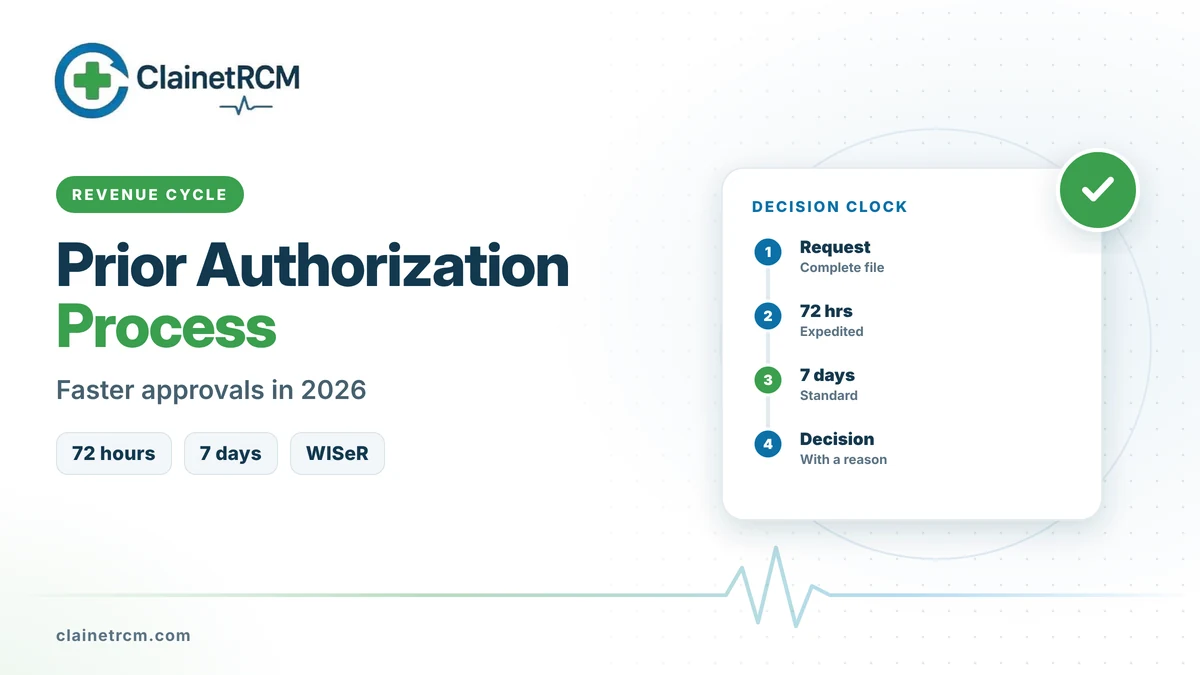
Our prior authorization process guide explains how to request and track approvals.
5. Benefits for the Planned Service
- Copay and coinsurance for the visit type and setting
- Annual deductible and how much has been met
- Out-of-pocket maximum and how much has been met
- Visit limits, such as therapy or chiropractic caps, and how many have been used
- Coverage for specific services, such as preventive care, telehealth or diagnostic tests
6. Other Coverage and COB
- Ask whether the patient has any other insurance, including Medicare, Medicaid, TRICARE or a spouse’s plan
- Apply the coordination of benefits rules to determine primary and secondary payers
- Ask Medicare patients the Medicare Secondary Payer questions
7. Patient Cost Estimate
- Estimate what the patient will owe based on benefits and your contracted rate
- Collect copays at check-in and discuss larger balances before the visit
- Provide a Good Faith Estimate to uninsured and self-pay patients, as the No Surprises Act requires: within one business day when a service is scheduled at least three business days ahead, and within three business days when it is scheduled at least ten business days ahead
8. Documentation
- Record the date and time of verification, the method (portal, 271 or phone), and the representative’s name and reference number for phone calls
- Save a copy of the eligibility response in the patient’s account
Real-Time Eligibility vs Phone Calls
270/271 transactions are the HIPAA standard for eligibility inquiries and responses. Most practice management systems and clearinghouses run them automatically, often in batches two or three days before appointments. Medicare offers eligibility through the HIPAA Eligibility Transaction System (HETS) and MAC portals.
Electronic responses answer most questions, but not all. Call the payer when the 271 response is incomplete, when benefits for a specific procedure are unclear, or when authorization rules are not listed. Always document the call reference number.
Who Should Own Verification
Assign verification to a trained patient access or benefits team rather than whoever is free at the front desk. Give them payer portal access, a call script and a clear deadline, such as verifying all appointments 72 hours in advance, and track the denials that still get through so the checklist keeps improving.
When to Re-Verify
- Before every visit for new patients
- Before every visit, or at least monthly, for established patients
- At the start of every year, when plans and deductibles reset
- Whenever a patient reports a job change, move, marriage or new card
- For Medicaid patients, every month
Front-End Denials This Checklist Prevents
| Denial | Typical cause | Checklist step |
|---|---|---|
| CARC 27: expenses incurred after coverage terminated | Coverage ended before the visit | Eligibility on the date of service |
| CARC 31: patient cannot be identified as our insured | Name, date of birth or ID mismatch | Patient and subscriber information |
| CARC 22: may be covered by another payer | Primary and secondary reversed | Other coverage and COB |
| CARC 197: authorization absent | No prior authorization | Referrals and prior authorization |
| Out-of-network denial | Provider not in the plan’s network | Plan type and network status |
| Benefit maximum reached | Visit limit exceeded | Benefits for the planned service |
Frequently Asked Questions
Patient and subscriber details, eligibility on the date of service, plan type and network status, referral and authorization requirements, benefits and patient cost, other coverage, and documentation of the verification.
Two to three business days before the visit, with a quick re-check on the day of service for high-risk patients, such as Medicaid patients or anyone with recent coverage changes.
Usually for eligibility, but not always for benefits or authorization rules. Call the payer when the response is incomplete.
Yes. Coverage changes frequently, especially at the start of a year.
A cost estimate that the No Surprises Act requires providers to give uninsured and self-pay patients before scheduled services.
Final Thoughts
An insurance verification checklist works only when it is used every time, for every patient. Build it into scheduling, document every check and fix problems before the patient arrives. Our benefits verification team handles verification for practices of every size, and our guide on how to reduce claim denials shows how front-end accuracy flows through the rest of the revenue cycle. For multiple-coverage patients, read our coordination of benefits guide.
Verify Every Patient Before They Arrive
Our benefits verification team checks eligibility, benefits, authorizations and COB before each visit, so claims go out clean the first time.
Start Benefits Verification
Written by
ClainetRCM Billing Team
ClainetRCM is a Boston-based revenue cycle management company specializing in medical billing, coding, credentialing and denial management for healthcare providers across all 50 states. Our AAPC and AHIMA certified team works inside your existing EHR, files claims within 24 to 48 hours and reviews every AR bucket on a 14-day cycle.