Aetna credentialing is the review Aetna completes before a clinician or facility can join its networks. Unlike some payers, Aetna starts with a request to join and then decides whether its network in your area needs your specialty before it credentials and contracts with you. That network need review is why some providers hear “the network is closed” even with a flawless application. Here is how the process works and what to do if Aetna says no.
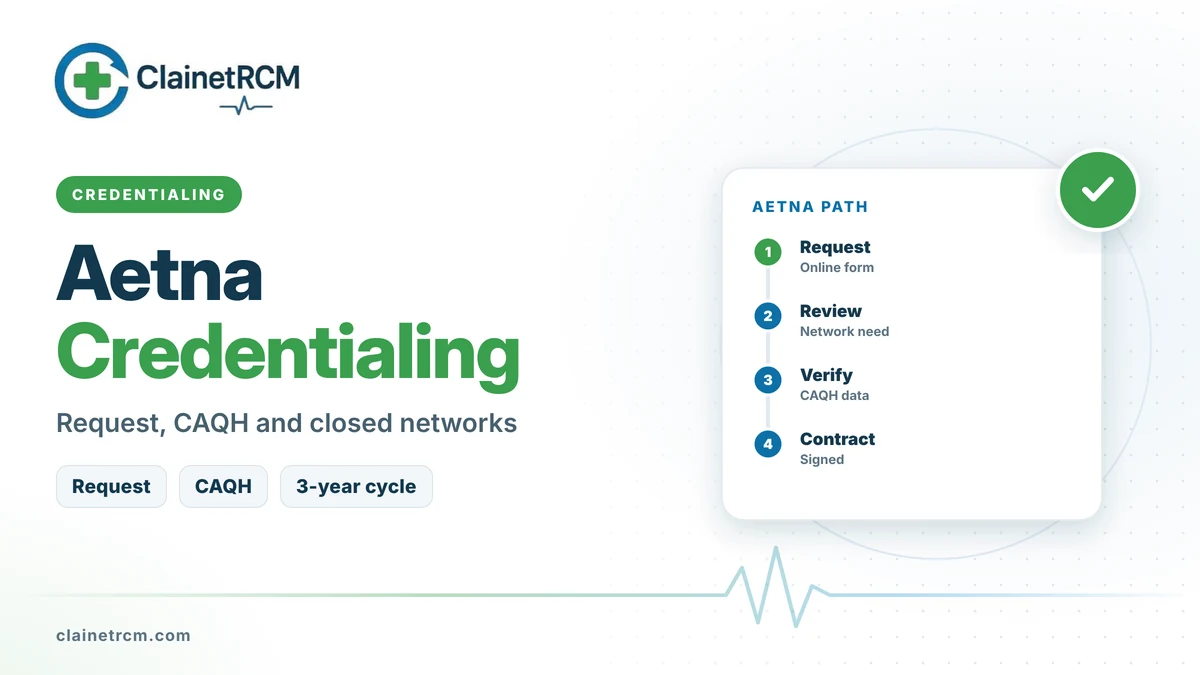
Quick answer: Complete your CAQH profile, authorize Aetna and attest. Then submit Aetna’s online request for participation for your provider type (medical, behavioral health, facility or dental) and save the confirmation or reference number you receive. Aetna reviews the request against its network needs in your area. If it moves forward, Aetna credentials you using CAQH data and sends a contract. You are in network only after credentialing is approved and the contract is signed with an effective date. Aetna recredentials providers every three years.
How Aetna Credentialing Works
| Stage | What happens | Your job |
|---|---|---|
| Request to join | Online request for participation by provider type | Submit accurate practice details and save the reference number |
| Network need review | Aetna checks whether its network in your area needs your specialty | Explain access needs, languages and availability |
| Credentialing | Aetna verifies your information from CAQH | Keep CAQH complete, authorized and attested |
| Contracting | Aetna sends an agreement and fee schedule | Review, sign and confirm the effective date |
| Recredentialing | Repeated every three years | Keep documents current between cycles |
Prepare CAQH Before You Apply
Aetna uses CAQH for credentialing and recredentialing. In June 2026, CAQH rebranded as DataSpring, powered by CAQH, and ProView is now called the CAQH Provider Data Portal; logins and workflows did not change.
- Complete every section, including work history with explanations for any gaps.
- Upload a current license, DEA registration if you prescribe, board certification and your malpractice face sheet.
- Authorize Aetna to view your profile, or use global authorization.
- Attest, and re-attest at least every 120 days.
Aetna Credentialing Step by Step
- Confirm your NPI and practice details. The name, address and TIN you enter should match NPPES, CAQH and your W-9.
- Submit the request for participation. Choose the right category: medical, behavioral health, facility or dental.
- Watch for Aetna’s response. If the network in your area has a need, Aetna moves the request into credentialing and contracting.
- Answer follow-up questions quickly. Missing CAQH documents and unexplained gaps are the most common holdups.
- Review and sign the contract. Check which products are included (commercial, Medicare Advantage and others), the rates and the effective date.
- Load the provider in your systems. Once Aetna confirms the effective date, update your billing system and confirm the provider appears in Aetna’s directory.
Aetna does not publish a standard turnaround time. Many practices plan for roughly three to four months from request to signed contract, and following up every two to three weeks helps keep a file moving.
What to Do When the Aetna Network Is Closed
Aetna reviews each request against its current network in a specific geographic area, consistent with state law. If it considers the area adequately served, it can decline the request. A closed network is not always final:
- Make an access case. Point out a subspecialty, language, extended hours, telehealth availability or a location the network lacks.
- Join through a participating group. Clinicians joining a group that already has an Aetna agreement are often added under that contract.
- Ask about specific products. Medicare Advantage, Medicaid (Aetna Better Health) and commercial networks can have different needs.
- Use a single case agreement. For an existing patient who needs your services, ask Aetna for a single case agreement.
- Reapply later. Network needs change as members move, clinicians retire and employers add plans.
Example: A Therapist Joining a Participating Group
A licensed clinical social worker joins a behavioral health group that already participates with Aetna. The office completes her CAQH profile, authorizes Aetna and submits the behavioral health request with the group’s TIN, then logs the reference number and submission date. Joining a participating group often avoids the toughest network need questions, so most of the work is credentialing. The office follows up every few weeks, and once Aetna confirms the effective date, it adds her to the billing system and checks that her directory listing shows the right location and specialty.
Aetna Better Health and Medicare Advantage
Aetna Better Health plans serve Medicaid members in several states and have their own state-specific credentialing processes. You must be enrolled in the state’s Medicaid program to participate. For Medicare Advantage networks, you must be enrolled in Medicare and not opted out.
Recredentialing Every Three Years
Aetna recredentials providers every three years using the same standards as initial credentialing. Keep CAQH attested, renew licenses and malpractice coverage on time and respond to recredentialing requests before the deadline so your participation does not lapse.
Frequently Asked Questions
Aetna does not publish a standard timeline. Many practices plan for about three to four months from the request to a signed contract, depending on network need and how complete the CAQH profile is.
Yes. Aetna uses CAQH for both credentialing and recredentialing, so your profile must be complete, authorized for Aetna and attested.
It means Aetna believes it already has enough providers of your type in that area. You can make an access case, join a participating group, ask about other products or request a single case agreement for specific patients.
Every three years. Watch for Aetna’s notice before the due date and keep CAQH current so recredentialing goes smoothly.
You can see them as an out-of-network provider if their plan has out-of-network benefits and they understand the cost, but in-network claims will not pay until credentialing and contracting are complete and your effective date has started.
Final Thoughts
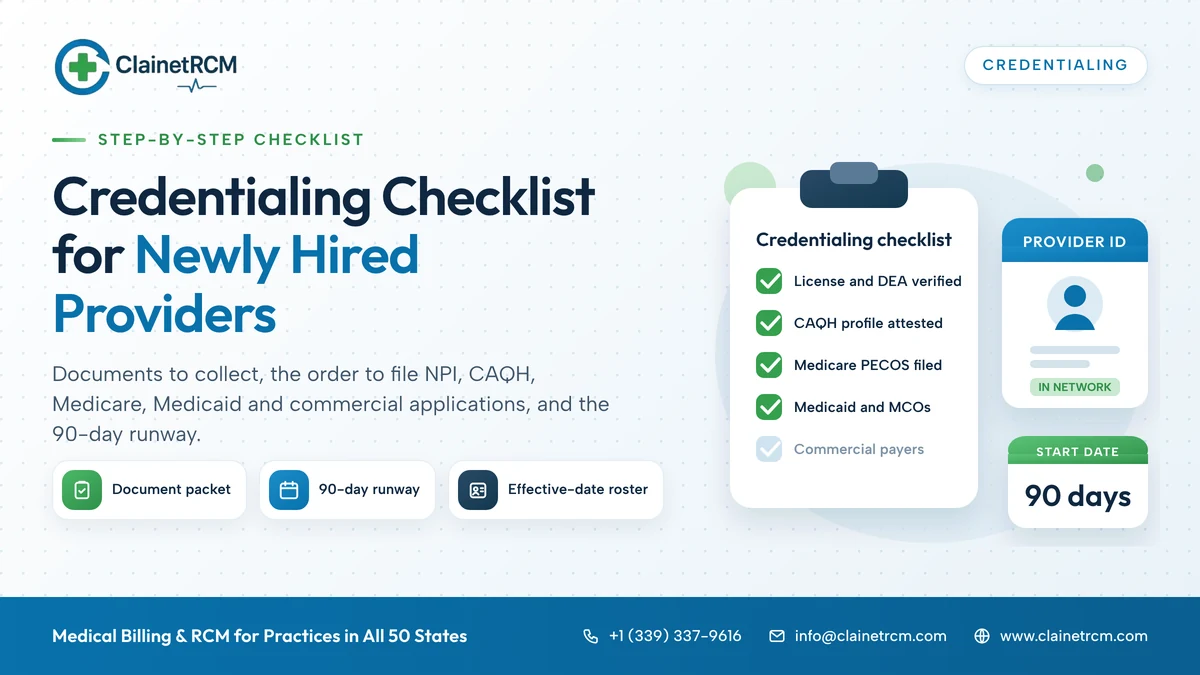
Aetna credentialing rewards a strong CAQH profile and a clear case for why the network needs you. Read our CAQH ProView guide, use our credentialing checklist for new providers, or let our credentialing services team handle Aetna requests and follow-up for you.
Join the Aetna Network With Less Back-and-Forth
We submit Aetna participation requests, maintain CAQH, follow up on status and build the case for access when a network says it is closed.
Start Aetna Credentialing
Written by
ClainetRCM Billing Team
ClainetRCM is a Boston-based revenue cycle management company specializing in medical billing, coding, credentialing and denial management for healthcare providers across all 50 states. Our AAPC and AHIMA certified team works inside your existing EHR, files claims within 24 to 48 hours and reviews every AR bucket on a 14-day cycle.