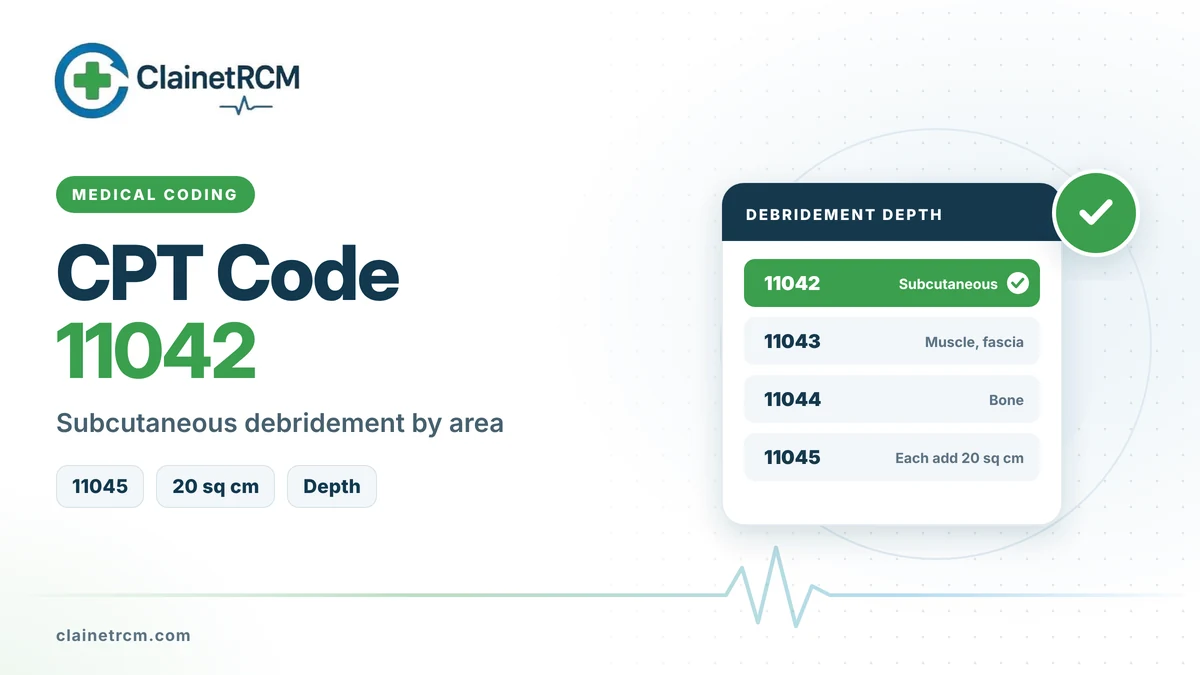
CPT code 11042 reports surgical debridement of subcutaneous tissue, the most common depth of debridement in wound care. The code is chosen by the deepest tissue removed and billed by surface area, with add-on code 11045 for each additional 20 square centimeters. Because wound debridement is a frequent target of audits, the measurements and depth in the note matter as much as the code.
Quick answer: Use 11042 for debridement of subcutaneous tissue (including epidermis and dermis when performed) for the first 20 sq cm or less, and add 11045 for each additional 20 sq cm or part of it. Code by the depth of tissue actually removed, not the wound’s depth: muscle or fascia is 11043 (plus 11046) and bone is 11044 (plus 11047). Add together the surface areas of wounds debrided to the same depth, and code wounds at different depths separately. Selective debridement of the wound surface without removing subcutaneous tissue is 97597 or 97598, not 11042.
Debridement Codes by Depth
| Deepest tissue removed | First 20 sq cm or less | Each additional 20 sq cm |
|---|---|---|
| Subcutaneous tissue | 11042 | 11045 |
| Muscle and/or fascia | 11043 | 11046 |
| Bone | 11044 | 11047 |
| Selective debridement of the wound surface | 97597 | 97598 |
| Non-selective debridement, such as wet-to-moist dressings | 97602 | — |
How to Calculate Surface Area
- Measure each wound after debridement, in centimeters: length × width.
- Group wounds by the deepest tissue removed.
- Add the surface areas within each depth group.
- Apply the codes: the first 20 sq cm or less gets the primary code, and each additional 20 sq cm, or part of it, gets one unit of the add-on.
| Total area at one depth | Codes |
|---|---|
| 12 sq cm subcutaneous | 11042 |
| 20 sq cm subcutaneous | 11042 |
| 37 sq cm subcutaneous | 11042, 11045 ×1 |
| 45 sq cm subcutaneous | 11042, 11045 ×2 |
What CPT Code 11042 Requires
Code 11042 requires removal of devitalized tissue at the subcutaneous level, such as necrotic fat, slough or biofilm attached to the subcutaneous layer, typically with a curette, scalpel, scissors or forceps. Removing only fibrin or slough from the wound surface, without cutting into subcutaneous tissue, is selective debridement (97597). Using the higher code when only the surface was cleaned is one of the most common audit findings.
Documentation Requirements
- Wound location, type and cause, such as a diabetic foot ulcer or pressure injury
- Wound measurements before and after debridement (length, width and depth)
- The type of tissue removed and the deepest layer reached
- The instruments and technique used, and any anesthesia
- Bleeding, hemostasis and how the patient tolerated the procedure
- The wound’s appearance afterward and the treatment plan
- Progress compared with prior visits
Medicare contractors expect wounds to show measurable improvement under active treatment and question repeated debridements without progress. Document why continued debridement is needed and how the plan will change if the wound stalls.
Diagnosis Coding
Link each debridement to the specific wound. Common diagnoses include non-pressure chronic ulcers of the lower limb (L97.-) with the depth character, pressure ulcers (L89.-), and for diabetic foot ulcers, the diabetes code first, such as E11.621 (type 2 diabetes with foot ulcer), followed by the ulcer code.
Billing Rules
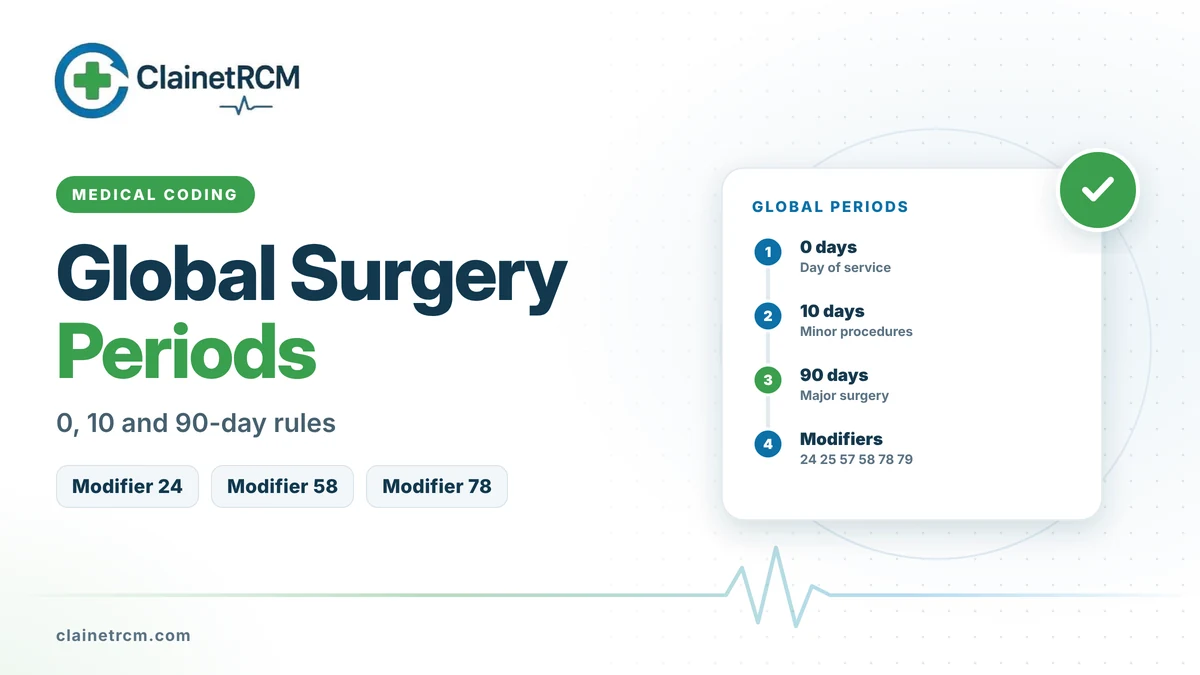
- Global period. The debridement codes have a zero-day global period. An E/M visit on the same day needs a significant, separately identifiable reason and modifier 25.
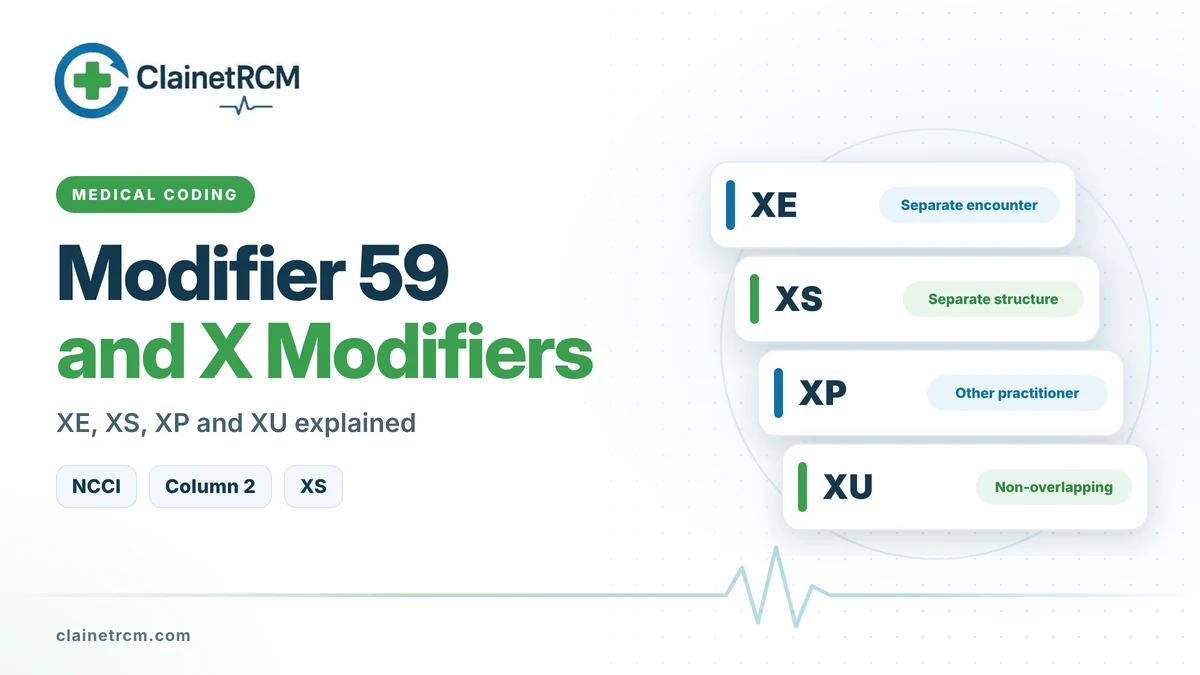
- Different wounds, different depths. Report each depth group on its own line and add modifier 59 or XS to the second wound when edits require it.
- Same wound, one depth. Do not report 97597 and 11042 for the same wound on the same day.
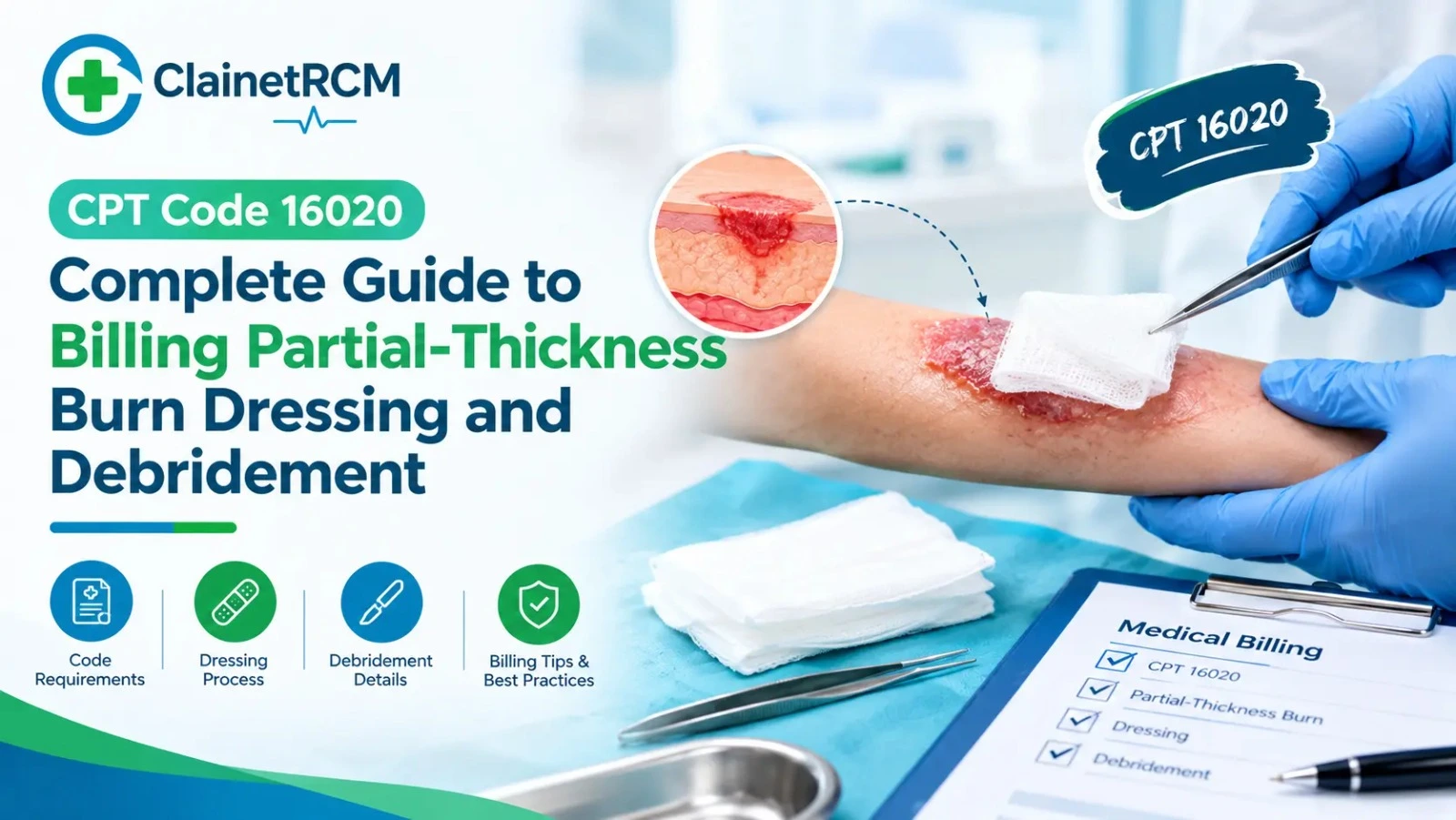
- Burns. Debridement of burns uses the burn codes, such as 16020 to 16030, not 11042.
Example
A patient with type 2 diabetes has a plantar ulcer measuring 3 × 4 cm and a heel ulcer measuring 5 × 5 cm. The podiatrist removes devitalized subcutaneous tissue from both with a curette.
- Total area at the subcutaneous level: 12 + 25 = 37 sq cm
- Codes: 11042 and 11045 ×1
- Diagnoses: E11.621 with the L97.- ulcer codes for each site
If the heel ulcer had instead required debridement into muscle, the heel would be reported with 11043 and 11046 ×1 (25 sq cm), and the plantar ulcer with 11042 and modifier 59 or XS.
Common Audit Findings
- Depth not supported. The note says “debrided” but never names the tissue removed.
- Measurements missing or pre-debridement only. Surface area must be supported by documented wound measurements.
- Surface cleaning coded as surgical debridement. Removing only slough or fibrin is 97597, not 11042.
- Areas not combined. Wounds at the same depth must be added together before the add-on units are counted.
- No progress. Repeated debridements of a wound that is not improving, without a documented change in the plan, invite denials.
Frequently Asked Questions
It includes debridement of subcutaneous tissue, plus the epidermis and dermis when removed, for the first 20 sq cm or less of wound surface.
Report 11042 for the first 20 sq cm and 11045 ×1 for the remaining 10 sq cm, because any part of an additional 20 sq cm counts as one unit.
By the deepest tissue actually removed. A deep wound in which only subcutaneous tissue was debrided is still 11042.
Code 11042 is surgical debridement that removes subcutaneous tissue. Code 97597 is selective debridement of the wound surface, such as removing slough or fibrin, without cutting into subcutaneous tissue.
Yes, when a significant, separately identifiable service is documented, such as managing another condition. Append modifier 25 to the E/M code.
Final Thoughts
CPT code 11042 pays well when the note proves the depth, the area and the progress of every wound. Learn how we support surgical and wound care practices on our general surgery billing page, or compare burn debridement coding in our CPT code 16020 guide.
Protect Your Wound Care Revenue
Our wound care coders check depth, surface area and progress documentation on every debridement so claims are paid and ready for review.
Get Wound Care Coding Help
Written by
ClainetRCM Billing Team
ClainetRCM is a Boston-based revenue cycle management company specializing in medical billing, coding, credentialing and denial management for healthcare providers across all 50 states. Our AAPC and AHIMA certified team works inside your existing EHR, files claims within 24 to 48 hours and reviews every AR bucket on a 14-day cycle.