New York Medicaid provider enrollment changed more in the past year than in the previous decade. The Department of Health (DOH) moved enrollment and revalidation into a new online Provider Services Portal, set risk-based revalidation cycles and paused new enrollment for several high-risk provider classes. If you plan to bill New York Medicaid or join a Medicaid managed care plan, here is how the process works now.
Quick answer: Enroll through the Provider Services Portal (PSP) on the eMedNY site using your NPI. Choose the correct enrollment type, such as individual practitioner, group, facility or ordering, prescribing, referring and attending (OPRA) only. Upload your license and the supporting documents the portal lists, including a notarized ETIN Certification Statement (form 490602) if you are a new billing enrollee. After you receive your Medicaid provider ID, set up claim submission, update the ETIN certification every year and watch for revalidation notices based on your risk level.
How New York Medicaid Provider Enrollment Works in 2026
- The PSP is mandatory. DOH launched the Provider Services Portal in September 2025, and all providers serving New York Medicaid members must now enroll and revalidate through it. Paper revalidations are no longer accepted.
- Risk levels drive revalidation. Under a CMS-approved plan, limited-risk providers revalidate every five years, moderate-risk providers every four years and high-risk providers every three years. Moderate-risk providers also face site visits, and high-risk providers add fingerprint-based background checks for owners of 5% or more.
- A statewide revalidation wave is underway. Notices began in July 2026 and roll out by risk level through June 2028, following a CMS directive that asks states to revalidate providers more often.
- Some provider classes face a moratorium. In July 2026, DOH imposed a temporary six-month enrollment moratorium on six high-risk categories, including laboratories, DMEPOS suppliers, applied behavior analysis and licensed home care services agencies. Providers who are already enrolled and other provider classes are not affected.
Choose the Right Enrollment Type
| Enrollment type | Who it fits | Notes |
|---|---|---|
| Individual practitioner | Clinicians billing under their own provider ID or within a group | Must also be linked to each group they work for |
| Group | Practices billing for affiliated practitioners | Each rendering practitioner must be enrolled and affiliated |
| OPRA | Ordering, prescribing, referring or attending providers who do not bill | Needed so labs, pharmacies and hospitals can be paid |
| Facility or business | Clinics, agencies and suppliers | Institutional types may owe the federal application fee |
| Managed care only | Non-billing network providers of Medicaid managed care plans | Satisfies the state screening requirement for plans |
Documents to Have Ready
- NPI and matching NPPES data
- A current New York license or certification with a future expiration date
- A W-9 or IRS EIN confirmation
- Ownership and controlling interest details for groups and businesses
- EFT authorization for new billing enrollees
- The ETIN Certification Statement for New Enrollments (form 490602), printed, signed and notarized before upload
ETIN and Electronic Billing Setup
An ETIN (Electronic Transmitter Identification Number) identifies who submits claims to eMedNY. New billing enrollees submit the notarized form 490602 with the enrollment. If you will use an ETIN that already exists, such as your group’s or a billing service’s, file the Certification Statement for Existing ETINs (form 490601) after you receive your provider ID.
The certification statement is not a one-time form. eMedNY asks providers to update it annually, and providers must also recertify ETIN affiliations with service bureaus every year. A lapsed certification interrupts claim submission, so put the renewal on your compliance calendar. Many Medicaid managed care plans also ask for a copy of your current ETIN certification when you join and every year after.
New York Medicaid Provider Enrollment Step by Step
- Check NPPES. Your NPI record must match the name, address and taxonomy you enter in the PSP.
- Register in the PSP. Link your user account to your provider record and confirm your identity.
- Select the enrollment type and complete each milestone. The portal walks through demographics, licensing, locations, ownership and supporting documents.
- Upload documents. Include the notarized 490602 if you are a new billing enrollee.
- Respond to requests quickly. DOH may ask for corrections, and slow answers push back your effective date.
- Receive your provider ID and set up billing. Confirm ETIN status, electronic remittance and EFT before you submit claims.
- Join managed care plans. Credential and contract with each Medicaid managed care plan you want to participate in.
Managed Care Credentialing
Most New York Medicaid members are enrolled in managed care, including mainstream Medicaid managed care, Health and Recovery Plans (HARPs) and managed long-term care. Plans credential providers separately, usually from CAQH data, but they also need proof that you are enrolled in New York Medicaid. Start plan credentialing while your Medicaid enrollment is pending so both finish close together.
Billing Deadlines After Enrollment
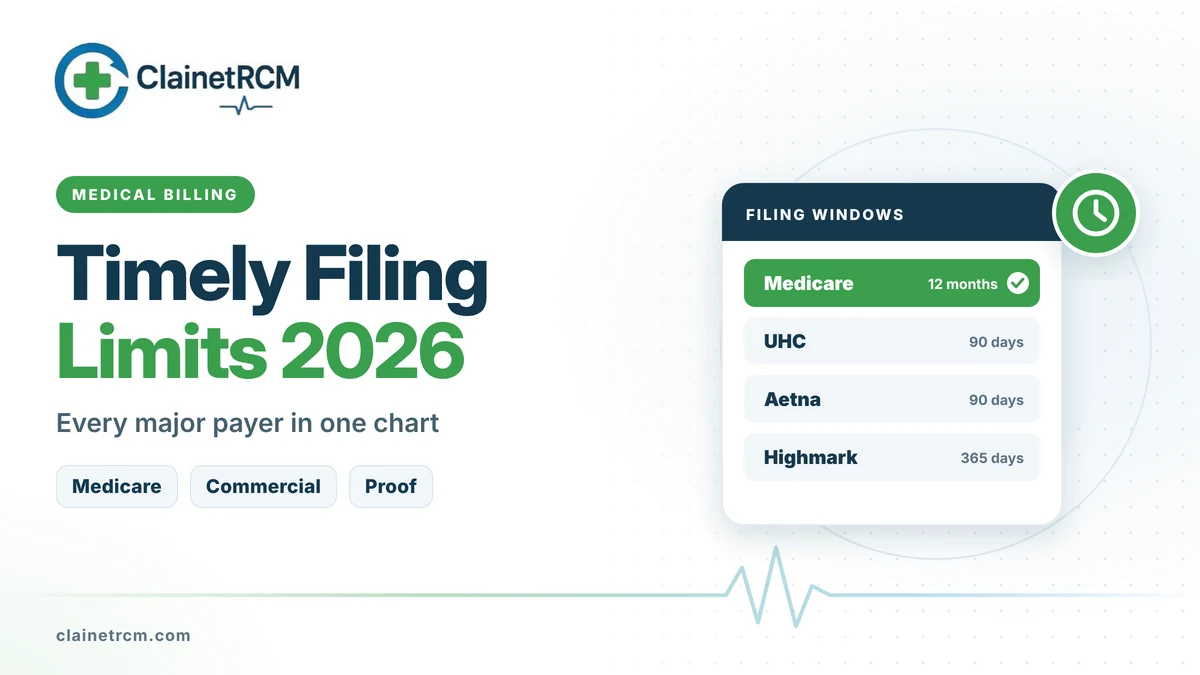
Enrollment does not pause timely filing. New York Medicaid generally requires fee-for-service claims within 90 days of the date of service, with limited exceptions. If enrollment is delayed, document the reason and follow eMedNY’s delay-reason rules when you submit late claims.
Frequently Asked Questions
Some forms, such as the ETIN certification statements, are still used as supporting documents, but the application itself is filed in the Provider Services Portal. Paper enrollment and revalidation have been phased out.
OPRA stands for ordering, prescribing, referring and attending. Clinicians who do not bill Medicaid but whose NPI appears on other providers’ claims must enroll so those claims can be paid.
It depends on your risk level: every five years for limited risk, every four years for moderate risk and every three years for high risk. Your revalidation notice tells you your designation.
Not necessarily. Providers can affiliate with an existing ETIN, such as a group’s or billing service’s, by filing the certification statement for existing ETINs after receiving their provider ID.
Only if you are a new applicant in one of the six provider classes DOH named, such as laboratories, DMEPOS suppliers, applied behavior analysis or licensed home care services agencies. Providers who are already enrolled are not affected.
Plan on several weeks to a few months depending on provider type, completeness and any site visit. Higher-risk provider types face additional screening, including site visits and fingerprinting of owners.
Final Thoughts
New York Medicaid provider enrollment now runs through the Provider Services Portal, and revalidation depends on your risk level. See how we support practices across the state on our New York page, compare the process with our Texas Medicaid enrollment guide, or let our credentialing team keep your enrollments and ETIN certifications current.
Enroll and Revalidate in NY Medicaid With Confidence
We manage Provider Services Portal applications, ETIN paperwork, revalidation notices and managed care credentialing for New York practices.
Get NY Enrollment Help
Written by
ClainetRCM Billing Team
ClainetRCM is a Boston-based revenue cycle management company specializing in medical billing, coding, credentialing and denial management for healthcare providers across all 50 states. Our AAPC and AHIMA certified team works inside your existing EHR, files claims within 24 to 48 hours and reviews every AR bucket on a 14-day cycle.