The PR-204 denial code tells you the patient’s plan does not cover the service at all. Unlike most denials, the patient is generally responsible for the charge. That makes PR-204 a collections and communication issue as much as a billing one, and the best fix happens before the visit.
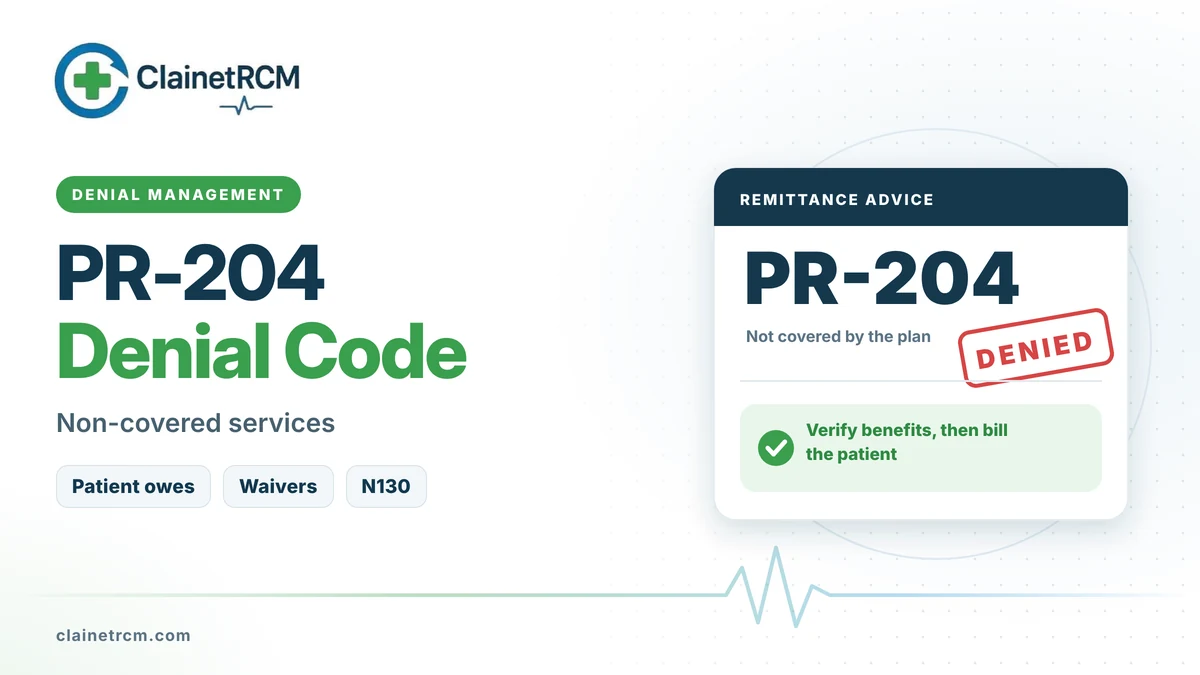
Quick answer: PR-204 is CARC 204, “This service/equipment/drug is not covered under the patient’s current benefit plan,” with group code PR (patient responsibility). The plan excludes the service, so you can generally bill the patient, subject to your contract, state law and any notice requirements. Confirm the service and plan were coded correctly, check whether another plan covers it, then bill the patient with a clear explanation. Prevent it by verifying benefits and getting a signed waiver before non-covered services.
What the PR-204 Denial Code Means
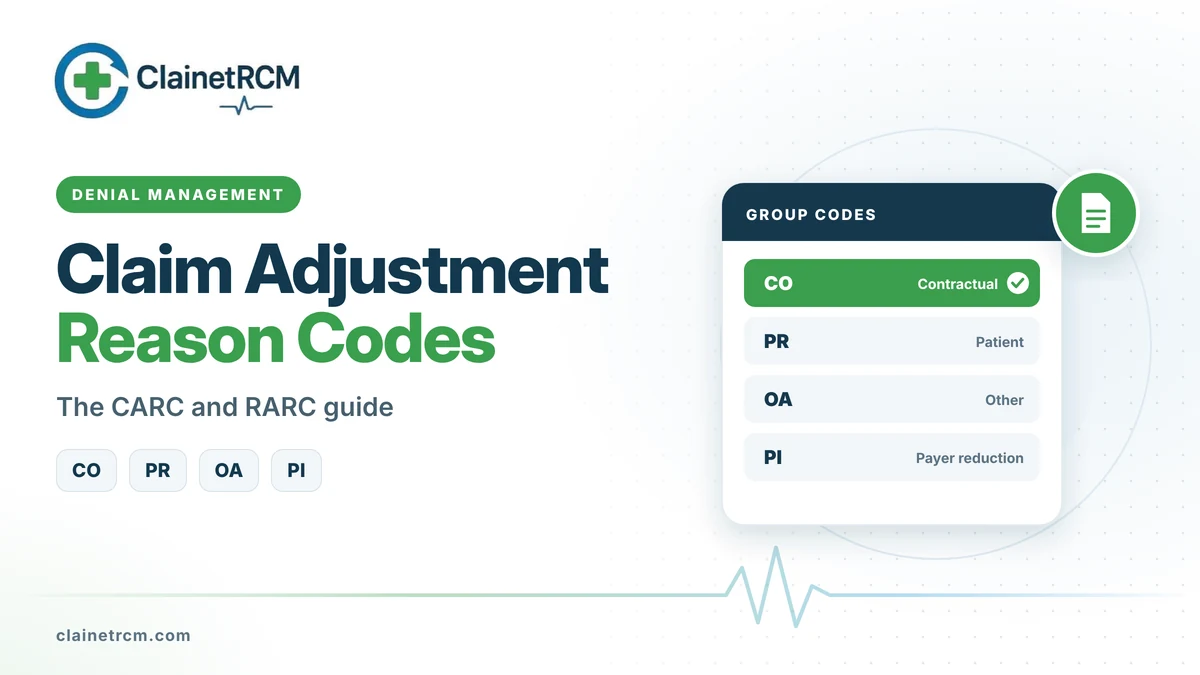
CARC 204 says the service, equipment or drug is not a covered benefit under the patient’s current plan. The group code PR means the patient can be billed.
PR-204 differs from other denials:
- Not a coding error (that would usually be CO-16 or CO-4)
- Not a medical necessity denial (that would be CO-50)
- Not a coverage-order problem (that would be CO-22)
It means the plan’s benefit design excludes the service. A common remark code is N130, “Consult plan benefit documents/guidelines for information about restrictions for this service.”
Common Services Denied as PR-204
- Cosmetic procedures, such as elective skin procedures or cosmetic injections
- Routine physicals under plans that do not cover them, including routine exams under Medicare
- Weight loss programs and drugs under plans that exclude them
- Hearing aids, routine vision care and dental care under medical plans
- Infertility services in states and plans without mandated coverage
- Experimental or investigational services under some plans
- Services by provider types the plan does not cover
When You Can Bill the Patient
The PR group code allows patient billing, but check three things first:
- Your payer contract. Some in-network contracts require a signed waiver before you can bill a member for non-covered services.
- Medicare rules. Services excluded by statute, such as routine physicals, can be billed to the patient without an ABN, although a voluntary notice is good practice. For services Medicare may deny as not reasonable and necessary, you need a valid ABN, and those denials come back as CO-50 or PR-50, not PR-204.
- State law. Some states limit balance billing or require advance written notice.
How to Handle a PR-204 Denial
- Confirm the claim is right. Check the procedure and diagnosis codes, the plan billed and the date of service. A coding error can make a covered service look excluded.
- Check for other coverage. A secondary plan, a supplemental policy or a separate dental or vision plan may cover the service.
- Review the plan documents if the denial seems wrong, and appeal if the plan covers the service.
- Bill the patient with a plain-language statement explaining that the plan excludes the service, and offer payment options. Our guide on improving patient collections covers statements that get paid.
How to Prevent PR-204 Surprises
- Verify benefits for the specific service, not just active coverage, before the appointment.
- Collect a signed financial waiver for services that are likely excluded, with the estimated cost.
- Give good faith estimates to self-pay and uninsured patients, as federal rules require.
- Train front-desk staff on common exclusions by plan type.
- Collect payment upfront for known non-covered services.
Our eligibility and benefits verification team checks service-level benefits before every visit.
PR-204 Denial Examples
Example 1: Cosmetic procedure. A patient asks to have a benign skin tag removed for appearance. The plan excludes cosmetic procedures, and the claim returns PR-204. Because the patient signed a financial waiver with the estimated cost before the procedure, the practice bills the patient as agreed.
Example 2: Routine eye exam on a medical plan. A patient sees an ophthalmologist for a routine refraction, which the medical plan excludes. The claim returns PR-204. The practice checks for a separate vision plan, finds one and bills it instead.
Example 3: Miscoded service. A covered diagnostic test is billed with a screening code that the plan excludes, and the claim returns PR-204. The documentation shows symptoms that made the test diagnostic. Fix: correct the coding and resubmit instead of billing the patient.
Example 4: Weight loss medication administration. A plan excludes weight loss drugs and related services. The claim returns PR-204, and the practice bills the patient under its financial policy, after confirming no other coverage applies.
Frequently Asked Questions
It means the service, equipment or drug is not covered under the patient’s current benefit plan, and the patient is responsible for the charge.
Generally yes, because the group code is PR. Check your contract, Medicare rules and state law for notice or waiver requirements first.
Both are non-covered adjustments. CARC 96 is a general “non-covered charge(s)” code, while CARC 204 specifically says the service is not covered under the patient’s current benefit plan.
Only if you believe the plan does cover the service or the claim was miscoded. Most PR-204 denials reflect real plan exclusions.
Verify service-level benefits before the visit and collect a signed waiver for services that may not be covered.
Not necessarily. PR-204 applies to the patient’s current benefit plan only. The same service may be covered under a different plan, a benefit rider the employer did not buy, or the patient’s secondary insurance. Check for other coverage and confirm the benefit with the payer before you transfer the balance to the patient.
Final Thoughts
The PR-204 denial code shifts the balance to the patient, so clear communication matters as much as clean billing. Verify benefits up front, get waivers for likely exclusions and explain the bill plainly. Our denial management team reviews PR-204 claims for hidden coverage before anything goes to the patient.
Know What’s Covered Before the Visit
We verify benefits and exclusions before appointments, collect signed waivers when needed and keep PR-204 surprises off your patient bills.
Talk to a Billing Expert
Written by
ClainetRCM Billing Team
ClainetRCM is a Boston-based revenue cycle management company specializing in medical billing, coding, credentialing and denial management for healthcare providers across all 50 states. Our AAPC and AHIMA certified team works inside your existing EHR, files claims within 24 to 48 hours and reviews every AR bucket on a 14-day cycle.