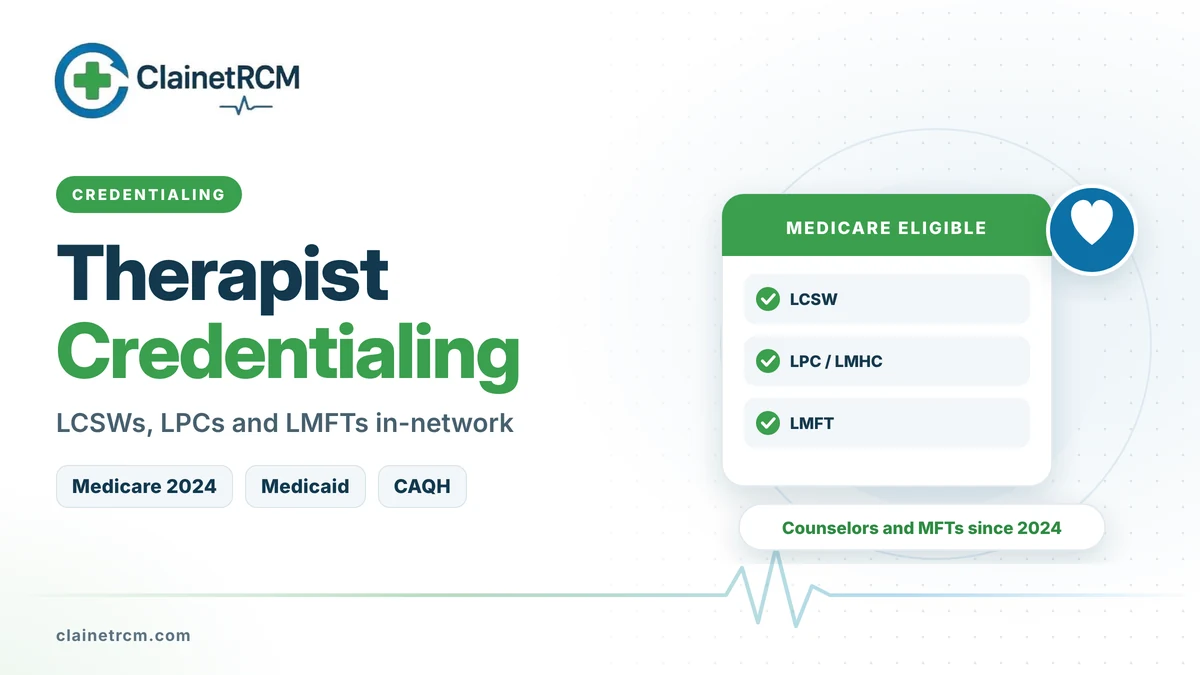
Therapist credentialing has changed more in the last few years than in the decade before. Since January 1, 2024, licensed counselors and marriage and family therapists can enroll in Medicare for the first time, joining clinical social workers and psychologists. Add Medicaid managed care, commercial plans and EAP networks, and a therapist who wants a full caseload may need a dozen enrollments. This guide explains the order, the requirements and the mistakes that slow therapists down.
Quick answer: A licensed therapist needs a Type 1 NPI with the right taxonomy code, an independent state license, malpractice coverage and a complete CAQH profile. Enroll in Medicare with the CMS-855I if you are an LCSW, or an LPC, LMHC or LMFT who meets Medicare’s requirements, including at least two years or 3000 hours of post-degree supervised experience. Medicare pays these clinicians 75% of the clinical psychologist fee schedule amount. Then enroll with your state Medicaid program, Medicaid managed care plans and the commercial and EAP networks your clients use.
Who Can Enroll in Medicare
| License (common titles) | Medicare category | Medicare status |
|---|---|---|
| LCSW, LICSW | Clinical social worker (CSW) | Eligible for many years |
| LMFT | Marriage and family therapists (MFT) | Eligible since January 1, 2024 |
| LPC, LMHC, LCPC, LPCC | Mental health counselors (MHC) | Eligible since January 1, 2024 |
| Licensed addiction counselor | May enroll as an MHC if they meet the MHC requirements | Since 2024, depending on qualifications |
| Clinical psychologist | Clinical psychologist | Eligible |
To enroll as an MFT or MHC, Medicare requires a master’s or doctoral degree that qualifies for licensure, state licensure or certification as an MFT or MHC, and at least two years or 3000 hours of post-degree clinical supervised experience. Associate-level licensees, such as an LPC-Associate or LMSW, cannot enroll in Medicare on their own.
Therapist Credentialing Step by Step
- Confirm the license. Payers credential independently licensed clinicians. Make sure the license is active in every state where your clients are located during sessions, including telehealth clients.
- Get or update the NPI. Choose the taxonomy that matches the license, for example 1041C0700X (clinical social worker), 106H00000X (marriage and family therapist), 101YM0800X (mental health counselor) or 101YP2500X (professional counselor).
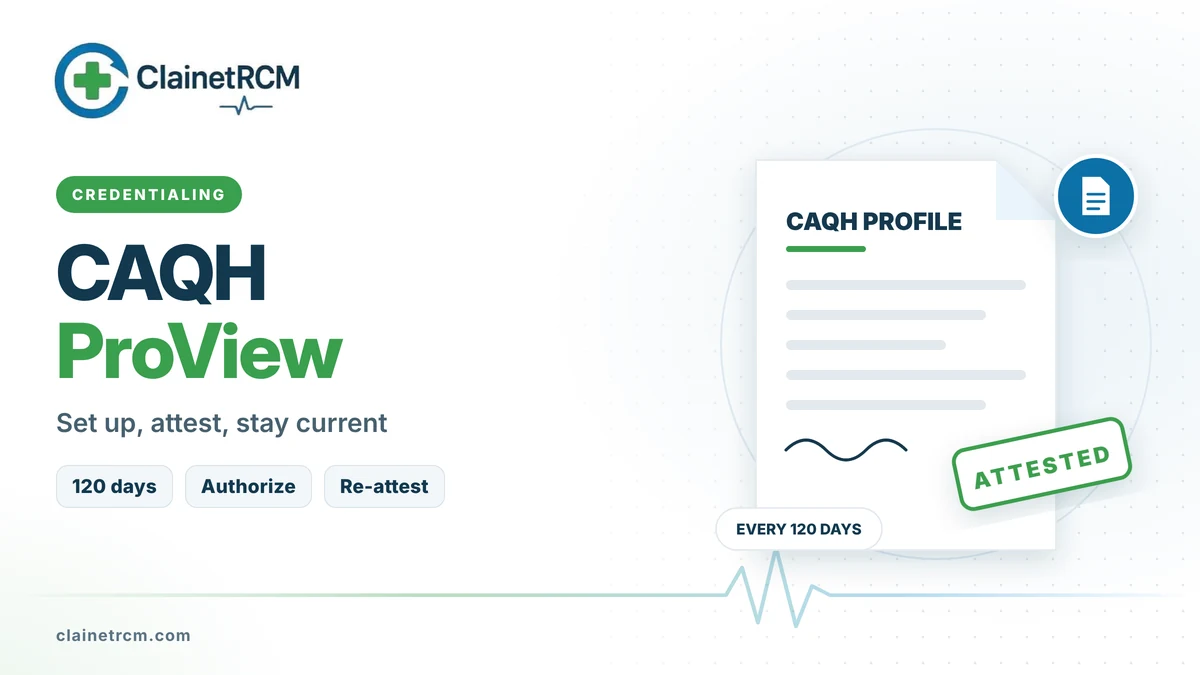
- Build the CAQH profile. Complete every section, upload the license, malpractice face sheet and diploma, authorize payers and attest. Re-attest every 120 days.
- Complete Medicare enrollment. File the CMS-855I in PECOS, with a reassignment if a group bills for you.
- Enroll in Medicaid. Complete the state enrollment first; Medicaid managed care plans require it before they will credential you.
- Apply to commercial plans and behavioral health networks. Many health plans manage mental health benefits through a separate behavioral health organization with its own network.
- Add EAPs if they fit your practice. Employee assistance programs credential separately and often refer short-term cases.
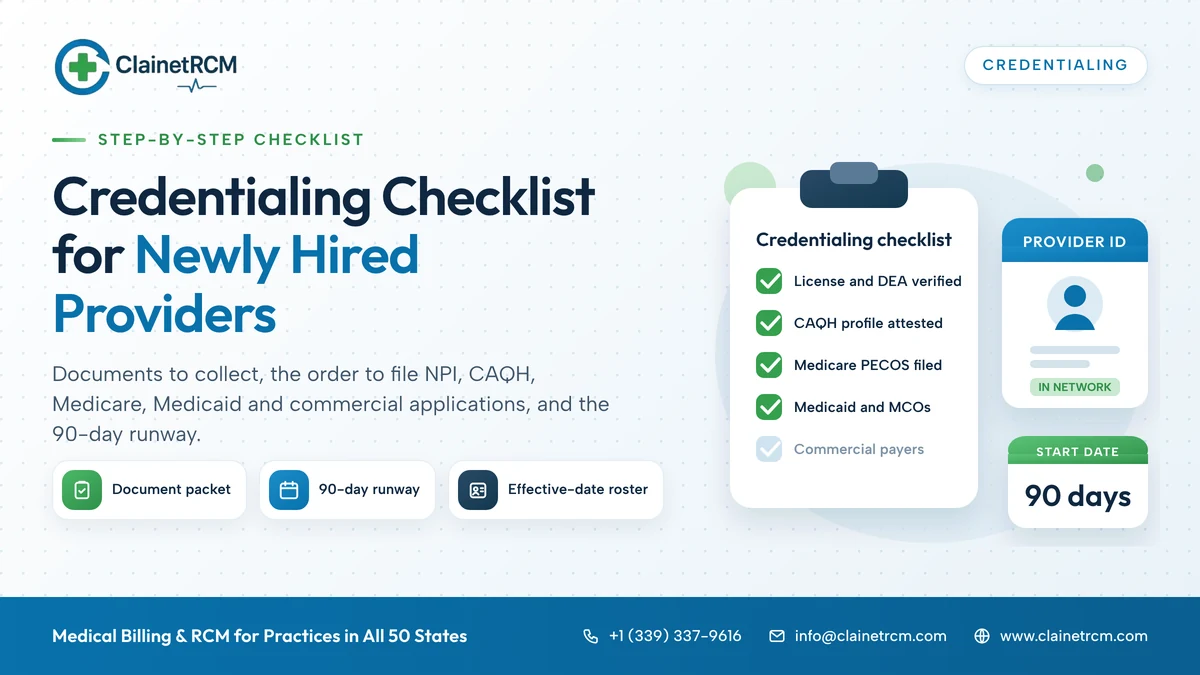
- Confirm effective dates before booking. Get each payer’s effective date in writing and update your billing system.
Medicare Payment for Therapists
Medicare pays CSWs, MFTs and MHCs 75% of the amount it pays a clinical psychologist for the same service. They bill the common psychotherapy codes, such as the 90837 psychotherapy code and the 90791 diagnostic evaluation, plus crisis and family psychotherapy codes when documentation supports them. Medicare’s behavioral health integration codes can also involve therapists as part of a care team.
Two Medicare rules matter for growing practices. First, behavioral health services provided by auxiliary personnel incident to a physician or other billing practitioner can be furnished under general supervision. Second, telehealth for mental health into the patient’s home is a permanent Medicare benefit, and Medicare’s broader telehealth flexibilities have been extended through December 31, 2027. Check the current in-person visit rules for mental health telehealth before relying on fully virtual care.
Medicaid and Commercial Panels
Medicaid is often a therapist’s largest payer, especially for child and family therapy. Each state sets its own rules for which license types can enroll, whether associate-level clinicians can bill under a supervisor, and which taxonomy codes are required on claims.
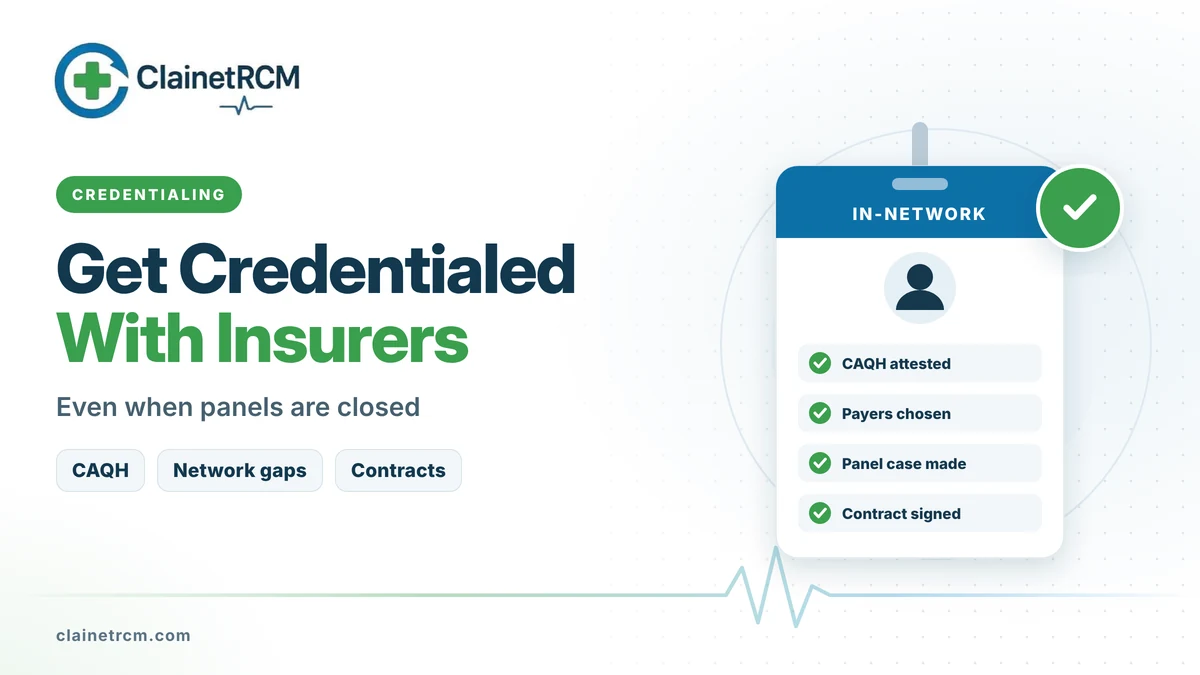
Commercial plans and their behavioral health partners often have closed or slow-moving networks for therapists in busy metro areas. A strong application emphasizes what the network lacks: evening hours, telehealth across the state, specialties such as trauma, eating disorders or child therapy, and languages spoken. Our guide on how to get credentialed with insurance companies explains how to respond to a closed panel.
Group Practice or Solo?
A solo therapist can enroll as an individual and bill under a Type 1 NPI. A group practice bills under a Type 2 NPI, and each therapist is credentialed and linked to the group. Joining an established, in-network group is often the fastest way for a newly licensed therapist to start seeing insured clients, because the group’s contracts and processes are already in place.
Common Therapist Credentialing Mistakes
- Choosing a taxonomy code that does not match the license
- Letting the CAQH attestation lapse
- Applying to Medicaid managed care plans before the state Medicaid ID is issued
- Seeing telehealth clients in a state where the therapist is not licensed
- Billing an associate’s sessions under a supervisor without confirming the payer allows it
- Assuming an EAP contract is the same as the health plan contract
Frequently Asked Questions
Yes. Since January 1, 2024, mental health counselors and marriage and family therapists who meet Medicare’s education, licensure and supervised experience requirements can enroll and bill Medicare directly.
CSWs, MFTs and MHCs are paid 75% of the clinical psychologist fee schedule amount for the same service.
Not with Medicare. Some Medicaid programs and commercial plans allow associates to provide services billed under a licensed supervisor, so check each payer’s policy in writing.
Medicare is often the fastest. Medicaid varies by state, and commercial and behavioral health networks commonly take 90 to 120 days.
For most commercial plans and many Medicaid managed care plans, yes. See our CAQH ProView guide.
Final Thoughts
Therapist credentialing is more open than ever, with Medicare now welcoming counselors and MFTs, but every payer still has its own process. Start with clean NPI and CAQH data, enroll in the right order and document what your practice adds to each network. Our counseling and therapy billing team supports therapists from credentialing through claims, and our mental health billing services cover larger behavioral health groups. New clinicians should also use our credentialing checklist for new providers.
Get Your Therapists In-Network
We enroll LCSWs, LPCs and LMFTs with Medicare, Medicaid, commercial plans and EAPs, and keep every CAQH profile current.
Start Therapist Credentialing
Written by
ClainetRCM Billing Team
ClainetRCM is a Boston-based revenue cycle management company specializing in medical billing, coding, credentialing and denial management for healthcare providers across all 50 states. Our AAPC and AHIMA certified team works inside your existing EHR, files claims within 24 to 48 hours and reviews every AR bucket on a 14-day cycle.